
⚡ The Lightning Summary
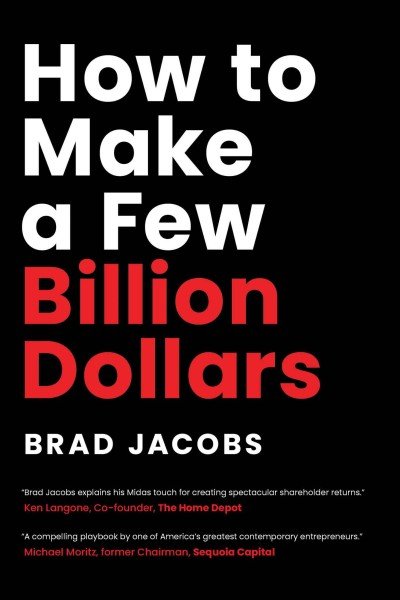
Build a multibillion-dollar company by mastering five core disciplines: rearranging your brain for possibility, identifying major economic trends early, executing disciplined mergers and acquisitions, assembling teams of exceptional talent, and creating a unified organizational culture where collaboration and open communication drive compounding value creation. The path isn’t luck or magic—it’s a repeatable system of mindset, strategy, hiring, and culture that works across industries and requires unwavering discipline to execute.
⭐ The One Thing
The one thing this book taught me: Building wealth at scale is the cumulative result of rigorous hiring, relentless trend analysis, disciplined M&A, and a culture that aligns every employee around shared purpose. Jacobs demonstrates that wealth creation isn’t a mysterious art reserved for the gifted—it’s a systematic process that anyone can execute if they’re willing to do the unsexy foundational work of building the right team and culture first, before anything else.
💭 First Impressions
What struck me most was the relentless focus on team composition and culture as the actual engine of wealth creation. In a landscape crowded with books about strategy and tactics, Jacobs spends nearly half the book on hiring criteria, meeting structure, and communication frameworks—which initially felt like going microscopic. But then it hit: he’s showing you that the real leverage isn’t in clever deal-making, it’s in having the right people to identify deals and execute them flawlessly. The thought experiment he uses to classify employees as A, B, or C players is disarmingly simple yet cuts through all the noise of performance reviews and compensation debates. What gave me genuine confidence in his framework is that he backs every principle with specific, tactical implementation details—the 45-question pre-interview form, the monthly operating review structure, the four simple rules for electric meetings—rather than vague platitudes about “empowerment.”
🔑 Key Concepts
-
The Rearrangement of the Brain Through Radical Acceptance: Success starts with rearranging how you think through thought experiments, meditation, reframing problems as opportunities, and radical acceptance of facts as they are. Jacobs argues that our mindset is the biggest lever for wealth creation—not luck or circumstance. By embracing imperfection, practicing non-judgmental thinking, and accepting reality without wasting energy on denial, you liberate mental bandwidth for solving actual business problems. This is the foundation because every subsequent discipline requires mental clarity and emotional control.
-
Trend Identification as the Central Determining Factor: Making a few billion dollars requires getting the major trend right early. Jacobs identifies AI as the central determining factor in modern business and demonstrates a methodology for trend analysis that includes deep reading, expert interviews, financial analysis, and tracking technology adoption patterns. The compounding advantage comes from identifying trends 3-5 years ahead of mainstream adoption, positioning your company to ride that wave rather than scrambling to catch up. This shifts business from reactive to proactive positioning.
-
Acquisition Strategy and Integration Excellence: Building companies through disciplined M&A requires deep due diligence, fair pricing, ruthless deal structure negotiation, and post-acquisition integration discipline that preserves cultural fit while extracting operational synergies. Jacobs has done hundreds of acquisitions across his companies and identifies that most value destruction happens in the first 90 days post-close through cultural misalignment or operational overstaffing. The playbook involves standardizing operations, maintaining entrepreneurial spirit, and being prepared to exit underperforming acquisitions quickly.
-
Hiring for the Four Non-Negotiable Traits: Building an outrageously talented team requires hiring specifically for intelligence (the ability to learn and solve complex problems), hunger (the drive to accomplish big things and make significant money), integrity (the non-negotiable commitment to doing what you say you’ll do), and collegiality (the quality of bringing others up rather than tearing them down). Jacobs demonstrates that skills are teachable but these four traits are not—and hiring the wrong person on any dimension contaminates the culture for everyone around them. The assessment methodology involves 7-8 rounds of interviews, a 45-question form that surfaces self-awareness, and rigorous reference checking.
-
Monetary Compensation as Alignment and Retention Tool: “Overpaying” top performers (providing bonuses and equity that allow them to accumulate tens or hundreds of millions of dollars) aligns their incentive structure perfectly with shareholder value creation. The psychological impact of enabling your best people to create generational wealth for themselves and their families creates loyalty and motivation that cheap compensation never will. The key is tying all compensation—salary, bonus, and equity—to the actual value that person creates for the company, making sure that the only way to earn windfall money is to make outsized contributions.
-
The A/B/C Player Framework as Your Talent Stratification System: Every employee can be classified as an A player (losing them would cause panic and urgent action to replace), a B player (their departure creates inconvenience but the organization can recover), or a C player (their departure is neutral or positive). The simple thought experiment of imagining someone quitting immediately tells you their true classification. Jacobs’s goal is an organization with all A players, no C players at all, and the minimum necessary number of B players. The implication is that your hiring bar should rise after every great hire and the coaching burden on B players should be significant.
-
Monthly Operating Reviews as the Backbone of Strategic Execution: The MOR is the most important recurring meeting in the organization—held every 30 days with 15-20 participants, featuring a pre-distributed data deck that attendees review and generate two takeaways and two questions for. The meeting itself is then purely discussion of the most important issues, with a structure that forces participation from everyone, explores conflicting opinions respectfully, and ends with recognizing who brought value to the conversation. This meeting structure prevents information silos, surfaces problems early, builds bench strength for succession, and creates an organization where alignment happens naturally.
-
Organizational Culture Built on Collaboration and Open Communication: Drawing from the concept of superorganisms (ant colonies that operate with distributed intelligence and collective purpose), Jacobs demonstrates that organizations thrive when information flows openly, every employee understands how they fit into the mission, and communication flows up, down, and across the organization with radical honesty. The investment in over-communication (town halls, surveys, board engagement, listening skills) pays compounding dividends in cultural alignment, faster decision-making, and stronger retention.
🧠 Mental Models & Frameworks
-
The Thought Experiment for Talent Assessment: Imagine an employee walking into your office saying they’re leaving immediately for another city and won’t accept a counteroffer. Your gut reaction tells you everything: panic means A player, resigned acceptance means B player, relief means C player. This single thought experiment cuts through all the performance metrics and compensation history to reveal the actual value someone creates. Use this quarterly to ensure your best talent knows they’re irreplaceable and your C players are marked for transition. It’s the fastest way to calibrate your organizational talent distribution.
-
The Compensation Design Matrix: Don’t delegate compensation structure to HR alone—design it yourself with full strategic intent. Sales compensation should balance top-line growth with profitability so teams optimize for quality customers, not just volume. Equity should reflect both current value and future potential, with spot bonuses for top performers whose holdings lag their contribution. The domino effect matters: how you pay sales impacts how operations prioritizes customer quality, which impacts how product builds features. Strategic compensation design makes the entire organization work together.
-
The Crowdsourced Agenda Framework: Send information in advance, ask every participant to write their top two takeaways and top two questions, rank all submissions, then spend the meeting purely on dialogue about the highest-priority issues. This single shift prevents meetings from becoming theater and makes them engines of strategic alignment. It forces rigor (people read carefully because they know they’ll be called on), surfaces diverse perspectives (questions reveal what’s actually confusing people), and respects everyone’s time by eliminating low-value discussion.
-
The Culture Alignment Spectrum: Organizations must balance superorganism-type unity (everyone aligned around mission, acting as one distributed intelligence) with preserving individual entrepreneurial spirit and autonomy. Too much unity creates conformity, too much individuality creates fragmentation. The lever is clear communication of mission combined with significant autonomy in how each person pursues it. XPO succeeded partly because it felt staffed by upbeat entrepreneurs all united around a common purpose.
-
The Hiring Assessment System: Use the structured pre-interview form to assess self-awareness and behavioral traits before interviews begin. Ask about strengths and weaknesses, highest and lowest moments, biggest mistakes and lessons learned, character and values, work habits and biases, and final fit questions. The questions aren’t trying to catch people—they’re designed to help genuinely self-aware candidates surface their real selves so you can assess the four non-negotiables (intelligence, hunger, integrity, collegiality) more accurately.
💬 My Favorite Quotes
Integrity is the foundation of success, and hiring trustworthy people makes it easier for others around them to focus on their jobs. It only takes one integrity-impaired person to disrupt a workplace, so it’s far more efficient to filter that person out in the hiring process.
If you hire a B player, they’ll probably hire C players. Then you’ll have C players led by B players.
An organization is like a party. You only want to invite people who bring the vibe up.
🙋 Who Should Read It?
-
Entrepreneurs and CEOs building for scale: Those who’ve built successful companies but struggled with the transition to scaling through acquisitions, team management, and organizational culture will find the A/B/C player framework, hiring criteria, and MOR methodology directly applicable to their growth challenges.
-
Business leaders seeking to understand wealth creation at scale: Those who believe wealth is created through luck or inspiration rather than rigorous systems will gain a practical playbook for identifying trends, building teams, executing deals, and creating organizational cultures that compound value over decades.
-
Managers and leaders building high-performance cultures: Those who struggle with meeting effectiveness, employee retention, and cultural alignment will find specific, immediately applicable frameworks like the monthly operating review structure, the four rules for respectful disagreement, and the compensation alignment methodology.
🔗 Additional Resources
-
Related Books: Extreme Ownership by Jocko Willink, Good to Great by Jim Collins, The Lean Startup by Eric Ries, Atomic Habits by James Clear, Zero to One by Peter Thiel
-
Frameworks Referenced: The Superorganism by Bert Hölldobler and Edward O. Wilson, David Goggins discipline frameworks, Michael Phelps visualization methodology
-
Organizations Mentioned: XPO Logistics, United Rentals, United Waste Systems, GXO Logistics, RXO, Saddleback Church, Starbucks, Target, Alcoa
-
Research and Methodology: Technology adoption curve analysis, financial analysis techniques, expert interview methodology, neuroscience of habit formation, small wins momentum research