
⚡ The Lightning Summary
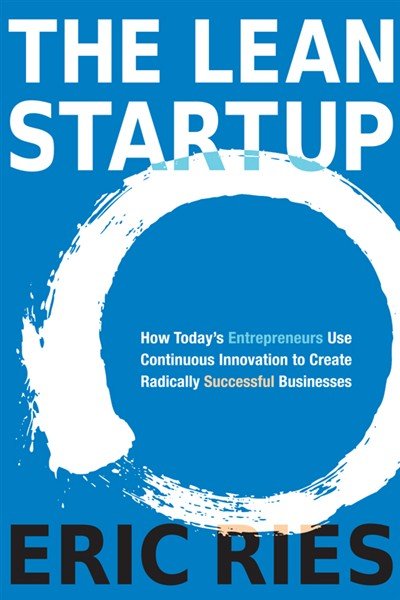
Stop building products nobody wants. The Lean Startup method applies scientific experimentation to entrepreneurship through the Build-Measure-Learn feedback loop. Create minimum viable products to test assumptions, use innovation accounting to measure real progress and know when to pivot or persevere. Speed wins not through reckless rushing but through eliminating the waste of building the wrong thing.
⭐ The One Thing
The one thing this book taught me: The goal of a startup is not to build a product or even to serve customers but to learn how to build a sustainable business. Validated learning is the essential unit of progress. Every feature, every marketing campaign, every line of code should be an experiment designed to test a hypothesis about your customers. The question is never “Can this product be built?” but “Should this product be built?” and “Can we build a sustainable business around it?”
💭 First Impressions
What struck me most was Ries’s driving versus rocket ship metaphor. Startups are not rockets requiring precise upfront calculations where a small error at launch means missing the moon by thousands of miles. They’re cars requiring constant steering through the Build-Measure-Learn feedback loop. This reframe fundamentally changed how I think about planning versus adapting. Combined with the “achieving failure” concept, where successfully executing a flawed plan is the most dangerous kind of failure because it looks like progress, the book delivered a gut-punch of clarity. You can be on time, on budget and utterly doomed because you’re building something nobody wants.
🔑 Key Concepts
-
Validated Learning: The process of demonstrating empirically that a team has discovered valuable truths about a startup’s present and future business prospects. It’s not after-the-fact rationalization but rigorous method for demonstrating progress under extreme uncertainty. Learning is the essential unit of progress for startups, and anything that doesn’t contribute to learning is waste.
-
Build-Measure-Learn Feedback Loop: The fundamental engine of a startup. Turn ideas into products (Build), measure how customers respond (Measure), then learn whether to pivot or persevere (Learn). The goal is to minimize total time through this loop. Every startup process should be geared to accelerate this cycle.
-
Minimum Viable Product (MVP): The version of a product that enables a complete turn of the Build-Measure-Learn loop with minimum effort and least development time. It’s not the smallest product imaginable but the fastest way to get through the feedback loop with the least effort. Types include video MVPs, concierge MVPs and wizard-of-oz MVPs.
-
Innovation Accounting: A new kind of accounting designed for startups that focuses on how to measure progress, set up milestones and prioritize work. It replaces vanity metrics with actionable metrics that demonstrate cause and effect. It holds innovators accountable by establishing learning milestones rather than traditional success metrics.
-
Pivot or Persevere: The most critical decision in any startup. A pivot is a structured course correction designed to test a new fundamental hypothesis about the product, strategy or engine of growth. Types include zoom-in pivot, zoom-out pivot, customer segment pivot, customer need pivot, platform pivot, business architecture pivot, value capture pivot, engine of growth pivot, channel pivot and technology pivot.
-
Systems Before Humans: Building on Frederick Winslow Taylor’s principle that “in the past the human has been first, in the future the system must be first.” The Lean Startup methodology emphasizes creating repeatable systems for experimentation rather than relying on founder genius or individual heroics. The goal is not to find exceptional people but to build exceptional systems that enable ordinary teams to achieve extraordinary outcomes through disciplined iteration.
🧠 Mental Models & Frameworks
-
The Startup Definition Framework: A startup is “a human institution designed to create new products or services under conditions of extreme uncertainty.” This definition applies to garage entrepreneurs and corporate innovators alike. If you face uncertainty about customers and product, you’re operating as a startup and these methods apply to your situation.
-
The Three Engines of Growth: Diagnose why your startup isn’t growing by identifying which engine you’re running. The sticky engine focuses on retention where you track churn rate versus acquisition rate. The viral engine depends on customers spreading the product naturally where you need a viral coefficient exceeding 1.0. The paid engine relies on customer lifetime value exceeding cost per acquisition. Most companies run one dominant engine.
-
Five Whys Root Cause Analysis: When problems occur, ask “why” five times to drill from symptoms to root causes. At the root of every seemingly technical problem is a human problem. Make proportional investments at each level. This acts as a natural speed regulator where more problems mean more investment in prevention.
-
Small Batches Principle: Working in small batches produces finished work faster than large batches because it eliminates sorting, stacking and rework from discovering problems late. Applied to startups, this means minimizing the time between building and measuring through continuous deployment rather than big releases.
-
Innovation Sandbox Rules: When creating space for experimentation within established organizations, constrain scope to certain pages, customers or territories while granting complete autonomy within those bounds. One team owns the entire experiment end-to-end with time limits and evaluation based on five to ten actionable metrics.
💬 My Favorite Quotes
The only way to win is to learn faster than anyone else.
The true measure of runway is how many pivots a startup has left.
Validated learning is the process of demonstrating empirically that a team has discovered valuable truths about a startup’s present and future business prospects.
🙋 Who Should Read It?
-
Startup founders drowning in feature requests who are building more and more features but not seeing growth, stuck in the trap of thinking one more feature will be the breakthrough. This book provides the framework to stop building in the dark and start testing what actually moves the needle.
-
Product managers in established companies facing pressure to innovate who are struggling against waterfall processes, stage-gate approvals and annual planning cycles. The book provides language and methodology for creating internal startups and innovation sandboxes that can operate with startup speed inside corporate constraints.
-
Engineers and developers frustrated by building products that fail who have experienced the soul-crushing reality of shipping perfectly functional features that nobody uses. The book reframes the job from “building what we’re told” to “learning what customers need” and provides tools to advocate for validated learning.
🔗 Additional Resources
Books Referenced by Author:
- The Four Steps to the Epiphany by Steve Blank – The original customer development methodology that Lean Startup builds upon. Available at custdev.com
- The Entrepreneur’s Guide to Customer Development by Brant Cooper and Patrick Vlaskovits – Gentle introduction to customer development
- Lean Thinking by James Womack and Daniel Jones – Foundation of lean manufacturing principles
- The Innovator’s Dilemma by Clayton Christensen – Explains why successful companies fail at disruptive innovation
- The Principles of Scientific Management by Frederick Winslow Taylor – Historical foundation of modern management
Lean Manufacturing Sources:
- Toyota Production System by Taiichi Ohno
- SMED (Single-Minute Exchange of Die) by Shigeo Shingo
Related Thinkers:
- Steve Blank – Customer Development methodology
- Marc Andreessen – Product/Market Fit concept
- Peter Drucker – Management theory foundations
- Geoffrey Moore – Technology adoption lifecycle, Crossing the Chasm
Online Resources:
- The Lean Startup website: theleanstartup.com
- Lean Startup Wiki: leanstartup.pbworks.com
- Lean Startup Circle community: leanstartupcircle.com
- Lean Startup Meetups: lean-startup.meetup.com