
⚡ The Lightning Summary
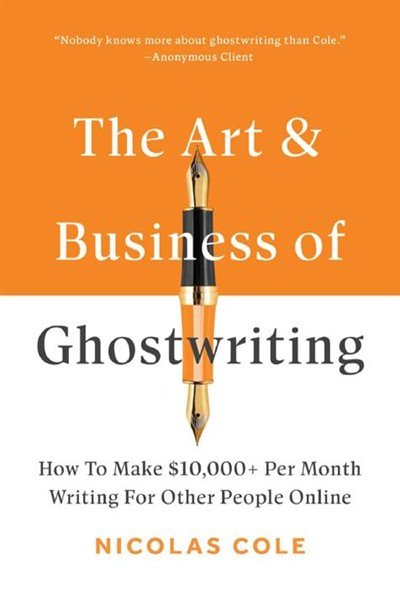
The highest-paid ghostwriters don’t get paid to write, they get paid to think like business consultants who happen to write. Master the art of capturing client voices through 5 archetypes, close listening and strategic interviewing. Escape hourly/per-word pricing by selling outcomes, not tasks. Build a $10,000+/month ghostwriting business through value-first outreach, free consulting and ruthless specialization in 1 specific problem for 1 specific person.
⭐ The One Thing
The one thing this book taught me: He or she who frames the problem owns the solution. Stop reacting to what clients think they want and start educating them on what you know they need. The moment you position yourself as a business consultant who happens to write rather than a writer who takes orders, you unlock the ability to charge premium rates and work with premium clients.
💭 First Impressions
The emphasis on sales and outreach over pure writing craft surprised me but makes total sense – you can’t succeed as a ghostwriter if you can’t find and close clients. The 5 voice archetypes framework is brilliant and immediately useful for capturing any client’s natural speaking style. Every chapter has frameworks you can implement today, making this one of the most immediately actionable writing books I’ve read.
🔑 Key Concepts
-
The 5 Voice Archetypes: Every client voice is a combination of Storyteller (personal anecdotes), Opinionator (strong viewpoints), Fact Presenter (data-driven), Frameworker (step-by-step systems) and F-Bomber (conversational language). The “ultimate ghostwriting voice” blends all five: personal story + strong opinion + relevant data + named framework + accessible language.
-
The 3-Phase Ghostwriting Process: Collect (record and transcribe all client conversations), Edit Down (cut intro/outro, remove rambling, skim for themes, whittle content in each section) and Read Aloud (test for brevity and voice authenticity). Never start with blank page, always prep the structure first.
-
Close Listening vs Regular Listening: Most people listen while their inner monologue competes for attention. Close listening means complete focus on what client is saying AND not saying. This creates safety and trust, making clients feel truly seen and heard, which unlocks their best thinking and stories.
-
He Who Frames the Problem Owns the Solution: Don’t react to client RFPs or requests. Instead, call them and say “You don’t need what you’re asking for” and reframe the problem entirely. The ad agency in the book would get hired to rewrite the RFP itself, then win the deal while competitors wasted weeks responding to the wrong brief.
-
Simplicity is Velocity: Work with 1 Specific Problem, for 1 Specific Person, in 1 Specific Way. Never switch contexts. When you write the same type of content for the same type of client using the same process, you enter autopilot mode. What takes others 2 hours takes you 20 minutes, unlocking massive pricing power and scalability.
🧠 Mental Models & Frameworks
-
The 80/20 Time Law: Use this when managing pricing risk while growing. Keep 80% of client slots filled with paying clients at current rates. Leave 20% open to place bigger bets by pitching higher rates to dream clients. Your downside is protected (80% income secure), upside is unlimited (land one high-ticket client and suddenly you’ve leveled up). Stop waiting until you’re “ready” to raise prices – use the 20% buffer to experiment with 2x or 3x rates without risking current income.
-
The Big 5 Desirable Outcomes: Use this when positioning your offer and pricing your services. Nobody wants “things”, they want outcomes. Every purchase maps to Money (make more), Status (be seen as special), Safety (do it right the first time), Connection (network with valuable people) or Self-Esteem (support and validation). Same ghostwriting service can be positioned completely differently based on which outcome you emphasize.
-
Asset + Outcome Based Pricing: Use this when moving from hourly/per-word to value-based pricing. Instead of “4 newsletters for $800” say “2 Twitter Threads/week (8/month) to position you as a Thought Leader for $5,000/month” or “Autopilot Lead Generation via 2 viral threads/week attracting 3 clients/month for $10,000/month.” Same work, 6-12x the price by articulating valuable outcome.
-
The Two-Narrative Structure: Use this when crafting irresistible offers and positioning yourself. Clients need to understand Narrative 1 (Specific Problem » Reason Why » Consequence » Ultimate Negative Outcome) and Narrative 2 (Specific Solution » Reason Why » Benefit » Ultimate Positive Outcome). Most freelancers only articulate the solution. Premium consultants articulate both narratives with painful specificity.
-
Category Creation vs Persuasion: Use this when positioning yourself in the market. Persuasion uses comparatives (better, faster, cheaper) and requires convincing. Category Creation names and claims a new niche with no direct comparison – you educate, not persuade. Don’t offer “better newsletter writing”, offer “Health Benefit Marketing for food brands.” When clients start using your language back to you, you’ve won.
💬 My Favorite Quotes
The highest-paid ghostwriters don’t get paid to write, they get paid to think like business consultants who happen to know how to write.
He or she who frames the problem owns the solution.
The more valuable the outcome, the more you can charge, WITHOUT changing what you’re actually doing.
🙋 Who Should Read It?
-
Freelance writers stuck at $3,000-$5,000/month who know they should be earning more but don’t know how to break through the ceiling – you’re trading time for money and realize there aren’t enough hours to scale, or you’re charging per word/hour and feel undervalued by clients who nickel-and-dime you.
-
Content creators wanting to monetize writing skills without building an audience first (you want paying clients now, not years of personal brand building), or agency owners and consultants looking to add writing services who need frameworks for delivering high-quality ghostwritten content at scale.
-
Career pivoters leaving corporate jobs to become freelance writers who have business acumen and professional networks but lack clarity on packaging services and landing clients, or writing coaches and educators who want to teach practical business skills beyond just craft.
🔗 Additional Resources
Books on Business Consulting & Positioning:
- “$100M Offers” by Alex Hormozi (offer creation and value equation)
- “The Win Without Pitching Manifesto” by Blair Enns (positioning as expert, not vendor)
- “Value-Based Fees” by Alan Weiss (pricing based on outcomes)
- “The Lean Startup” by Eric Ries (MVP approach to service offerings)
Books on Copywriting & Writing Craft:
- “The Art and Business of Online Writing” by Nicolas Cole (complementary book on writing craft)
- “Everybody Writes” by Ann Handley (digital writing best practices)
- “On Writing Well” by William Zinsser (clarity and simplicity)
- “Made to Stick” by Chip and Dan Heath (memorable communication)
Books on Sales & Client Acquisition:
- “The Mom Test” by Rob Fitzpatrick (how to ask questions that reveal truth)
- “To Sell Is Human” by Daniel Pink (modern sales psychology)
- “Never Split the Difference” by Chris Voss (negotiation tactics)
- “The Challenger Sale” by Matthew Dixon (teaching, not pitching)