⚡ The Lightning Summary
Reject conventional business wisdom. Build a profitable business by doing less, not more. Launch before you’re ready. Build half a product perfectly instead of a whole product poorly. Embrace constraints as advantages. Hire slowly, work efficiently, ship constantly. Small is a destination, not a stepping stone. Execution beats planning. Make something people actually need by scratching your own itch. The real world is just an excuse, start now.
⭐ The One Thing
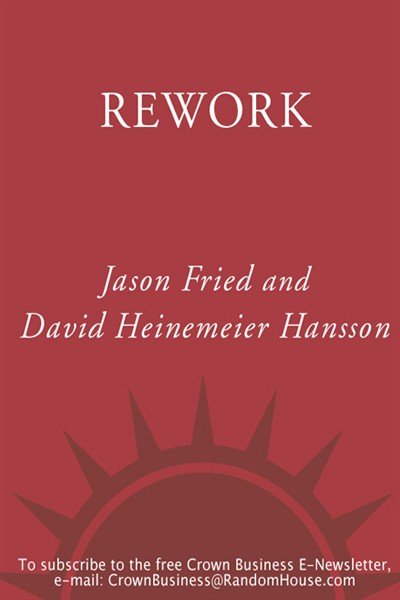
The one thing this book taught me: You’re better off with a kick-ass half than a half-assed whole. This principle applies to everything—products, features, plans, meetings, hiring. Most businesses fail by trying to do too much. Success comes from relentless focus on what matters, ruthless elimination of what doesn’t, and shipping something great rather than waiting for something perfect. The curator mindset (what you exclude) matters more than the accumulator mindset (what you include).
💭 First Impressions
The short chapters are brilliant execution—each is 2-3 pages with a provocative title that you can read in 5 minutes, immediately act on, and come back later. The format mirrors the philosophy of doing less and doing it well. Starting with “The real world isn’t a place, it’s an excuse” immediately establishes the book’s confrontational tone and serves as a rallying cry for anyone who’s been told their ideas won’t work. The contrarian stance is refreshing and liberating—nearly every chapter challenges something I was taught about business, and having each myth systematically dismantled feels like permission to do things differently.
🔑 Key Concepts
-
The Curator Mindset (Less is More): Great products aren’t built by adding features—they’re built by removing them. Like a museum curator who excludes 99% of available art to create a coherent exhibition, product builders must say “no” by default. The best is a sub-sub-subset of all possibilities. Every feature you add is a commitment to maintain, document, and support forever. Focus ruthlessly on the core, the epicenter, what you absolutely cannot remove without destroying the product’s essence.
-
Execution Over Planning: Planning is guessing disguised as work. Long-term business plans are fantasy because you can’t predict the future. Plans let the past drive the future and make you blind to opportunities. What you need is commitment and decisiveness, not a 5-year roadmap. Make decisions just-in-time when you have maximum information. Small decisions that you can change are better than big decisions that lock you in.
-
Constraints as Advantages: Limited resources aren’t obstacles—they’re gifts. Constraints force creativity and focus. Southwest Airlines succeeded because it couldn’t match established airlines’ resources, so it invented a different model. When you have all the time and money in the world, you solve problems by throwing resources at them. When you’re constrained, you find elegant, efficient solutions.
-
Launch Before You’re Ready: Waiting for perfect conditions guarantees you’ll never start. Launch when you have something valuable, even if incomplete. You’ll never feel ready—that anxiety is a feature, not a bug. Early customers are forgiving and provide invaluable feedback. Obscurity during your early days is a gift—you can make mistakes privately, iterate quickly, and find your voice without scrutiny.
-
Scratch Your Own Itch: Build products you yourself need and would pay for. This gives you unique advantages: you understand the customer intimately (you are the customer), you know exactly what “good enough” looks like, and you can make decisions quickly without market research or focus groups. The best businesses solve problems their founders actually experienced.
🧠 Mental Models & Frameworks
-
The Epicenter Method: Use this when deciding what to build, what to cut, or where to focus limited resources. Ask “If I took this away, would what I’m selling still exist?” Everything that passes this test is the epicenter—the absolute core. Build the epicenter first, perfectly. Only then add supporting features. Most products are 90% decoration around a 10% core. When building anything, identify the one thing it absolutely must do and build only that until it’s exceptional.
-
The Reasons to Quit Framework: Use this before starting any new feature, project, or initiative. Ask eight questions: Why are you doing this? What problem are you solving? Is this actually useful? Are you adding value? Will this change behavior? Is there an easier way? What could you be doing instead? Is it really worth it? If you can’t answer clearly, don’t do it. Make this a required template for all project proposals.
-
The Manager of One Filter: Use this for hiring decisions and evaluating team members. Look for people who don’t need managing—they set their own goals, develop their own plans, and execute without oversight. The interview question is: “What have you built on your own from scratch?” People who’ve shipped something independently demonstrate they can manage themselves. Avoid people who need hand-holding, constant direction, or external motivation.
-
The Half-Product Philosophy: Use this for product design, feature prioritization, and scope decisions. Cut your product in half, then cut what’s left in half again. Build 25% of your original vision, but make it exceptional. Customers prefer a small, perfectly executed product over a large, mediocre one. When planning a project, list all features, then ruthlessly cut until only the truly essential remain.
-
The By-Product Strategy: Use this when looking for new revenue streams or ways to add value. Every process creates by-products. Lumber companies turned wood scraps into Kingsford charcoal. 37signals turned internal documentation into the bestselling book “Getting Real” ($1M+ revenue). Look at what you’re already making and ask “Is there value in the waste?” Often the by-product becomes more valuable than the original product.
💬 My Favorite Quotes
The real world isn’t a place, it’s an excuse. It’s a justification for not trying. It has nothing to do with you.
Planning is guessing. Unless you’re a fortune-teller, long-term business planning is a fantasy.
Decisions are temporary. If circumstances change, your decisions can change.
🙋 Who Should Read It?
-
Solo founders and side project builders who are overwhelmed by everything they think they need to do to launch a business or building something nights and weekends with limited time and money. This book cuts through the noise: constraints are advantages, ship faster by doing less, and you’re better off with a kick-ass half than a half-assed whole.
-
Entrepreneurs frustrated with conventional advice where traditional business books tell you to write detailed plans, raise venture capital, scale quickly, and compete on features. This offers a completely different playbook: planning is guessing, bootstrap indefinitely, stay small and profitable, focus ruthlessly using the curator mindset and epicenter method.
-
Anyone waiting to start “someday” because they’re waiting for the right time, more savings, a perfect idea, or ideal conditions. This book demolishes every excuse and shows you how to start now with what you have by scratching your own itch.
🔗 Additional Resources
Books by the Same Authors:
- “Remote: Office Not Required” (distributed teams and remote work culture)
- “It Doesn’t Have to Be Crazy at Work” (building calm, sustainable companies)
- “Getting Real” (earlier book on building web applications)
Companies Referenced as Examples:
- 37signals/Basecamp (authors’ company, primary case study)
- Craigslist (demolished classified ads with minimal staff)
- Zappos (billion-dollar company differentiated by customer service)
- Southwest Airlines (thrived through constraints)
- Whole Foods (clear values drive all decisions)
Related Business Philosophy:
- Bootstrapping (building without external funding)
- Lifestyle businesses (sustainable, profitable, enjoyable work)
- Indie hacking (solo/small team product building)
- Minimalism (less is more applied to business)