
⚡ The Lightning Summary
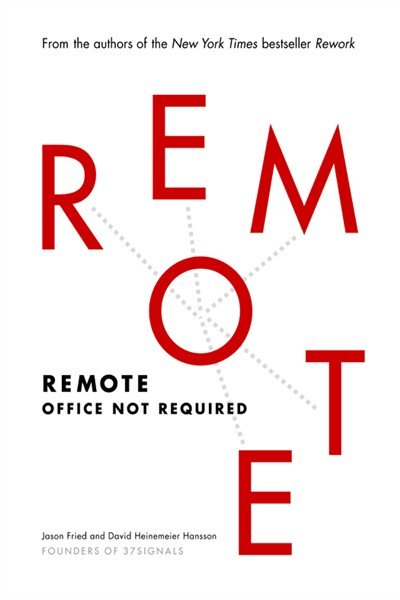
Remote work isn’t just feasible, it’s superior. The technology exists, the benefits are clear (freedom, global talent, no commute, better focus), and the only missing piece is trust. Judge people by what they produce, not where they sit. Build culture through actions and values, not foosball tables. Collaborate asynchronously using great writing and purposeful tools. The office is obsolete. “Office not required” is the present, not the future.
⭐ The One Thing
The one thing this book taught me: If you can’t trust someone to work remotely, you shouldn’t trust them at all. Remote work exposes the fundamental truth about management: you should judge people by their output, not their presence. When you can’t see someone all day, the only thing you have to evaluate is the work itself, which is exactly what matters. Everything else (the excuses, the surveillance, the mandatory office time) is just covering for a lack of trust or poor hiring.
💭 First Impressions
The commute research is damning – learning that commuting causes obesity, insomnia, stress, neck pain, high blood pressure, heart attacks, depression and even divorce makes the traditional office model seem barbaric. We’re literally sacrificing health and happiness for proximity. The writing emphasis is practical and often overlooked – “Being a good writer is an essential part of being a good remote worker.” Most remote work advice ignores this, but it’s foundational. The trust argument is devastating and simple – “If you can’t let your employees work from home out of fear they’ll slack off without your supervision, you’re a babysitter, not a manager.” This cuts through every excuse managers make about needing butts in seats.
🔑 Key Concepts
-
Output Over Input (Work vs. Presence): Traditional management measures the wrong things – hours in office, meetings attended, busyness displayed. Remote work forces you to measure what actually matters: the work produced. When you can’t see someone all day, you evaluate results, not activity. This shift transforms management from babysitting to leadership. People rise or fall based on contribution, not politics or face time. The office creates an illusion of productivity through visible busyness. Remote work demands actual productivity.
-
Trust as Foundation: Every excuse against remote work (“How do I know they’re working?” “People will slack off” “I need to see them”) stems from lack of trust. But if you can’t trust someone to work unsupervised, you have a hiring problem, not a location problem. People have an amazing ability to live down to low expectations – treat everyone like slackers and they’ll prove you right. Conversely, trust people and most will exceed expectations. The bottom line: don’t hire people you don’t trust, or work for bosses who don’t trust you.
-
The New Luxury (Freedom and Time): Old status symbols were corner offices, company cars, executive parking. The new luxury is freedom: work from anywhere, set your own schedule, live where you want, spend time with family, pursue passions. Once you experience this freedom, no amount of money or traditional perks can compensate for its loss. This explains why people who go remote rarely return – they’ve tasted a better quality of life and won’t give it up for superficial benefits.
-
Asynchronous Collaboration: You don’t need everyone in the same place at the same time to do great work. Most questions can wait for email (80%), some need chat (15%), and very few require real-time interaction (5%). The office forces synchronous communication (constant interruptions) which destroys deep work. Remote work enables asynchronous communication – people respond when it makes sense, protecting focus time. This requires better writing skills and more deliberate communication, but produces higher quality work.
-
Global Talent Access: Confining hiring to one city or requiring relocation to headquarters artificially limits your talent pool to maybe 1% of possible candidates. Remote work gives you access to the other 99%. You can hire the absolute best person for the role regardless of geography. This applies both ways – talented people in smaller cities or other countries can access opportunities previously available only in hubs like San Francisco or New York. The monopoly of major cities on top talent is ending.
🧠 Mental Models & Frameworks
-
The 4-Hour Overlap Rule: Use this when designing work schedules for distributed teams across time zones. Teams need minimum 4 hours of overlapping work time for effective real-time collaboration when needed. Example: Copenhagen (11am-7pm) and Chicago (8am-5pm) have sufficient overlap. Beyond that, asynchronous communication fills the gaps. When hiring globally, map out time zones and ensure at least a 4-hour window. Consider “remote-friendly” zones (Americas, Europe + Africa, Asia-Pacific) that cluster together.
-
80-15-5 Communication Priority: Use this when deciding which communication channel to use for different types of questions. 80% of questions and communication can wait for email (asynchronous, thoughtful, documented). 15% benefit from chat/instant message (quicker but still semi-asynchronous). Only 5% truly require phone calls or video (synchronous, high-bandwidth). Default to asynchronous – escalate only when necessary. Before interrupting someone with a call or message, ask: “Is this truly in the 5%, or can it wait for email?” Protects others’ focus time and forces clearer thinking.
-
Smart and Gets Things Done (Hiring Filter): Use this when evaluating candidates, especially for remote positions. Joel Spolsky’s framework says hire people who are (1) Smart – actual intelligence shown through work product, and (2) Get Things Done – consistent delivery and task completion. Remote work makes these qualities transparent because you can’t hide behind meetings and face time. Either the work appears or it doesn’t. During hiring, test actual skills with real work (paid test project), not brain teasers. Judge candidates by deliverables, not polish in interviews.
-
Three Work Chunks Method: Use this when structuring your day for optimal productivity. Divide work into three types: (1) Catch-up – email, news, administrative tasks (low cognitive demand). (2) Collaboration – team interaction, meetings, discussions (medium demand). (3) Serious Work – deep focus, creative work, complex problem-solving (high demand). Match your energy levels to work types – most people do Serious Work best in morning, Collaboration in afternoon, Catch-up in gaps. Protect morning for deep work, batch meetings in afternoon, handle email in transition periods. Don’t start day with inbox or meetings.
-
The “Good Day’s Work” Self-Assessment: Use this at the end of each workday to gauge productivity and satisfaction. Ask yourself: “Have I done a good day’s work?” If yes, stop working and feel satisfied – no need to put in hours just to hit 8 or 10. If no, apply the Five Whys to identify root cause: Why not? Why did that happen? Why did that condition exist? Continue five levels deep to find the real problem (often systemic, not just “I was lazy”). Build this into your shutdown ritual. “Good day’s work” creates satisfaction without guilt. “Bad day” analysis prevents repeating mistakes.
💬 My Favorite Quotes
If you can’t let your employees work from home out of fear they’ll slack off without your supervision, you’re a babysitter, not a manager.
The new luxury is the luxury of freedom and time. Once you’ve had a taste of that life, no corner office or fancy chef will be able to drag you back.
The technology is here. It’s never been easier to communicate and collaborate with people anywhere, any time. But that still leaves a fundamental people problem. The missing upgrade is for the human mind.
🙋 Who Should Read It?
-
Managers skeptical about remote work who believe people need to be in the office to be productive. This book systematically dismantles every objection (“How do I know they’re working?” “People will slack off”) with logic, data and real-world examples showing that if you can’t trust someone remotely, you have a hiring problem, not a location problem.
-
Business owners considering distributed teams who are thinking about allowing remote work but don’t know where to start. This provides the complete playbook: hiring practices, the 4-hour overlap rule, 80-15-5 communication framework, security protocols and common pitfalls like creating “lone outpost” second-class citizens.
-
Anyone trapped by commuting and office politics who is spending 2+ hours commuting daily (causing obesity, stress, heart attacks, depression), missing family time, unable to live where you want, or exhausted by office drama. This book shows there’s a better way and how to negotiate for it using the “morning remote, afternoon local” compromise if needed.
🔗 Additional Resources
Books Referenced:
- “On Writing Well” by William Zinsser – Writing clearly and concisely, essential for remote work
- “The Elements of Style” by Strunk & White – Classic writing reference
- Joel Spolsky’s writings – Smart and Gets Things Done hiring framework
Companies Profiled:
- 37signals/Basecamp – Authors’ company, primary case study throughout
- IBM – 40% remote (160,000+ employees), $100M+ annual savings
- Aetna – Nearly half of 35,000 employees remote
- Deloitte – 86% work remotely at least 20% of time
Related Business Books:
- “Rework” by Jason Fried & DHH – Companion book on modern business practices
- “It Doesn’t Have to Be Crazy at Work” by Jason Fried & DHH – Calm company philosophy
- “Deep Work” by Cal Newport – Focus in a distracted world
- “The Four-Hour Work Week” by Tim Ferriss – Location independence