
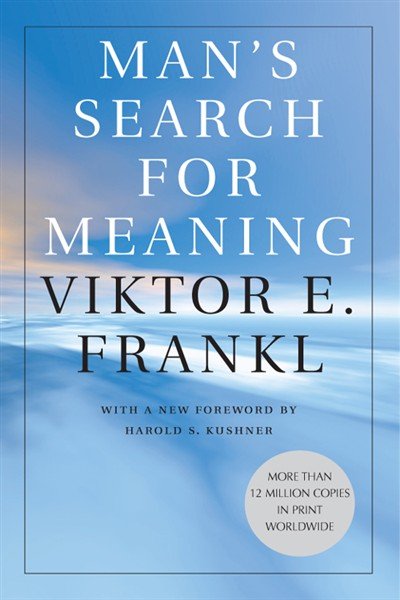
⚡ The Lightning Summary
A psychiatrist’s memoir of surviving Nazi concentration camps and his discovery that the primary human drive is the search for meaning, not pleasure or power. Life has meaning under all circumstances, even the most miserable. We possess one freedom that cannot be taken away: choosing our attitude toward unavoidable suffering. Meaning can be found through creating work, experiencing love and choosing one’s response to suffering.
⭐ The One Thing
The one thing this book taught me: “Everything can be taken from a man but one thing: the last of the human freedoms—to choose one’s attitude in any given set of circumstances, to choose one’s own way.” Even in a concentration camp where prisoners had lost every physical freedom, spiritual freedom remained. Some gave away their last bread to comfort others. This inner freedom, this choice of attitude, is what separates human dignity from animal survival. Our response to unchangeable circumstances defines who we are.
💭 First Impressions
The observation that those who lost hope invariably died first—the spike in deaths between Christmas 1944 and New Year’s 1945 when liberation didn’t come—revealed the mind-body connection with stunning clarity. Part Two (Logotherapy theory) felt slightly abstract after the intense narrative of Part One, but the integration showed how extreme suffering birthed profound psychological insight. The concept that we don’t pursue happiness or success but rather they “ensue” as byproducts of meaning fundamentally reframes goal-setting and life orientation.
🔑 Key Concepts
-
The Will to Meaning: Humans are primarily motivated by the search for meaning, not pleasure (Freud) or power (Adler). When the will to meaning is frustrated, existential vacuum results—a widespread modern phenomenon of inner emptiness. Mental health requires striving toward meaningful goals, not tensionless homeostasis.
-
The Last Human Freedom: Forces beyond your control can take everything except your freedom to choose your response. Even under the most extreme dehumanization, spiritual freedom remained. Some prisoners walked through huts comforting others, giving away their last bread. These few proved that attitude choice is the ultimate human freedom.
-
The Three Sources of Meaning: We discover life’s meaning through creating work or doing a deed—finding purpose through achievement and contribution; experiencing something or encountering someone—especially love, which grasps another’s essence and enables seeing their potential; and the attitude toward unavoidable suffering—transforming tragedy into triumph through courageous response.
-
Life Questions Us: We must stop asking what we expect from life and instead recognize that life questions us. We answer through responsible action, not philosophical speculation. Each situation is unique and demands a different response. This responsibleness is the essence of human existence.
-
Self-Transcendence: Self-actualization occurs only as a side-effect of self-transcendence. The more one forgets himself—by giving himself to a cause to serve or another person to love—the more human he is. Paradoxically, those who directly pursue happiness or success miss them.
🧠 Mental Models & Frameworks
-
The Three Ways to Find Meaning: Use this when feeling life is meaningless or struggling with difficult circumstances. Create work or do deeds (achievement/contribution), experience beauty or love (connection with people, art, nature), or choose attitude toward unavoidable suffering (transform tragedy to triumph). When facing challenges, ask: Can I change this situation? If yes, what work can I create? If no, what attitude can I choose?
-
Logotherapy’s Categorical Imperative: Use this when making decisions about actions with moral implications. “Live as if you were living already for the second time and as if you had acted the first time as wrongly as you are about to act now.” This makes your responsibility vivid—you’re imagining the wrong choice already made and being given a second chance.
-
Noö-Dynamics (Healthy Tension): Use this when feeling restless or thinking equilibrium is the goal. Mental health requires tension between what you’ve achieved and what you still ought to accomplish, not tensionless homeostasis. Like an arch that’s strengthened by the load it bears, we need the pull of meaningful future goals.
-
The Relativity of Suffering: Use this when comparing your suffering to others’ or minimizing your own pain. A man’s suffering is similar to the behavior of gas—it will fill the chamber completely and evenly, no matter how big the chamber. Suffering completely fills the human soul regardless of whether the suffering is great or little.
-
Tragic Optimism: Use this when facing life’s unavoidable pain, guilt or death. Maintain optimism despite the “tragic triad” by choosing meaning-oriented responses. Suffering can be transformed into achievement, guilt into change, life’s transitoriness into responsibility to act now.
💬 My Favorite Quotes
Everything can be taken from a man but one thing: the last of the human freedoms—to choose one’s attitude in any given set of circumstances, to choose one’s own way.
He who has a Why to live for can bear almost any How.
Don’t aim at success—the more you aim at it and make it a target, the more you are going to miss it. For success, like happiness, cannot be pursued; it must ensue.
🙋 Who Should Read It?
-
People facing unavoidable suffering—chronic illness, disability, loss of loved ones or other unchangeable painful circumstances—where you’re feeling that suffering is meaningless and purely destructive. Frankl’s distinction between changeable suffering (remove the cause) vs. unavoidable suffering (choose your attitude) provides a decision tree for navigating difficult situations with agency.
-
Those experiencing existential emptiness despite external success—achieved career goals and life milestones but feeling hollow inside, asking “Is this all there is?” Fulfillment comes as byproduct of self-transcendence toward meaningful work or service, not from pursuing happiness directly.
-
Therapists, counselors and students of psychology working with clients facing depression, anxiety or meaninglessness where current therapeutic approaches aren’t addressing the deeper existential questions clients bring. Want integration of existential philosophy with clinical psychology in practical framework.
🔗 Additional Resources
Books Referenced or Related:
- “When Bad Things Happen to Good People” by Harold S. Kushner (foreword author, similar themes)
- “The Doctor and the Soul” by Viktor Frankl (precursor work on logotherapy)
- “The Will to Meaning” by Viktor Frankl (expanded logotherapy theory)
- “Yes to Life: In Spite of Everything” by Viktor Frankl (lectures from 1946)
Philosophical Influences:
- Friedrich Nietzsche (will to power, eternal recurrence, strength through suffering)
- Søren Kierkegaard (existential choice, anxiety, despair)
- Martin Heidegger (being-towards-death, authenticity)
Psychological Schools:
- First Viennese School: Sigmund Freud (psychoanalysis, will to pleasure)
- Second Viennese School: Alfred Adler (individual psychology, will to power)
- Third Viennese School: Viktor Frankl (logotherapy, will to meaning)
Related Thinkers:
- Rollo May (existential psychology, anxiety as opportunity)
- Irvin Yalom (existential psychotherapy, four ultimate concerns)
- Martin Seligman (positive psychology, PERMA model includes meaning)