⚡ The Lightning Summary
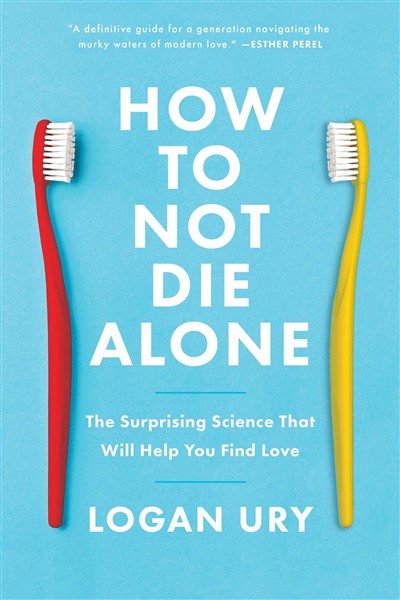
Dating isn’t a natural instinct. Most people fail at relationships because they make predictable, irrational decisions driven by invisible cognitive biases. Behavioral science reveals how to override these patterns through intentional decision-making. Stop waiting for fairy-tale romance, optimize for long-term compatibility over instant chemistry and design relationships that evolve with you. Success comes from treating love as a series of strategic choices, not magical accidents.
⭐ The One Thing
The one thing this book taught me: Intentional Love means treating your romantic life as a series of conscious choices rather than accidents. While love may be a natural instinct, successful dating and relationships require informed, purposeful decision-making about your habits, partner selection and crucial relationship conversations. The quality of your relationship depends far more on deliberate strategy than on fate or chemistry.
💭 First Impressions
The Secretary Problem application to dating (37% rule) initially seemed cold and mathematical but makes profound logical sense. The Three Dating Tendencies (Romanticizer, Maximizer, Hesitater) immediately resonated as accurate archetypes that most people fall into. I was surprised by how many relationship “truths” are actually cognitive biases in disguise (the spark, soul mates, love at first sight). The blend of behavioral science research with practical dating advice felt genuinely novel—neither dry academic theory nor fluffy relationship platitudes.
🔑 Key Concepts
-
The Three Dating Tendencies: Everyone has blind spots that sabotage their love life. Romanticizers have unrealistic expectations of relationships (believing in effortless fairy-tale love), Maximizers have unrealistic expectations of their partner (always wondering if someone better exists), and Hesitaters have unrealistic expectations of themselves (waiting until they’re “ready” to date). Understanding your tendency reveals what’s holding you back and provides a roadmap for behavioral change.
-
Intentional Love Philosophy: Love is a series of choices, not accidents. While falling in love may feel spontaneous, successful long-term relationships require conscious decision-making informed by behavioral science and relationship research. This means acknowledging bad habits, adjusting dating techniques and approaching crucial conversations purposefully rather than hoping things “just work out.” Process creates peace when there’s no certainty in relationships.
-
Prom Date vs. Life Partner: Most people optimize for the wrong qualities when dating. Prom Dates look great in pictures, provide fun nights and impress your friends but lack long-term viability. Life Partners are reliable, trustworthy people who will be there during highs and lows, make decisions with you and complement your growth. The shift from seeking Prom Dates to Life Partners should happen 6-8 years before you want children, deliberately changing how you evaluate potential partners.
-
Work-It-Out Mindset vs. Soul Mate Beliefs: People with soul mate beliefs expect love to be effortless and reject promising partners when relationships require work, assuming difficulty means they’re with the wrong person. Those with work-it-out mindsets understand that all relationships require effort and building a successful partnership is a process. Research shows mindset dramatically impacts relationship outcomes. The soul mate belief, reinforced by Disney movies and rom-coms, creates unrealistic expectations that doom otherwise viable relationships.
-
The Spark is Overrated: Instant chemistry and fireworks are rare, often misleading and insufficient for long-term success. Love at first sight happens in only 11% of cases. Sometimes the “spark” indicates anxiety or reflects someone’s charm rather than genuine compatibility. Many divorced couples once had the spark. Instead of optimizing for that exciting feeling, look for the “slow burn”—someone who may not be immediately dazzling but demonstrates loyalty, kindness, emotional stability and brings out your best self.
🧠 Mental Models & Frameworks
-
The Secretary Problem / 37% Rule: Use this when determining when you have enough dating experience to commit to someone. Interview 37% of candidates to establish a meaningful benchmark, then hire (commit to) the first person who exceeds that standard. In dating, calculate 37% of your expected dating window (from when you started dating to when you want to settle down), then commit to the next person you like as much or more than your best relationship from that first period. This framework eliminates Maximizer paralysis by providing mathematical proof that you already have sufficient data to make an excellent choice.
-
The Event Decision Matrix: Use this when deciding which social events to attend when trying to meet people IRL. Plot potential events on two dimensions: likelihood of enjoying yourself (vertical axis) and likelihood of meaningful interaction with others (horizontal axis). Prioritize events in the upper-right quadrant (high enjoyment, high interaction). Avoid lower-left events (low enjoyment, low interaction). This framework helps busy people strategically invest social energy in activities most likely to produce romantic connections while avoiding time-wasting obligations.
-
The Post-Date Eight: Use this after every first date to shift from evaluative to experiential mindset. Instead of checking if someone meets requirements, answer eight questions about how you felt: What side of me did they bring out? How did my body feel? Am I more energized or de-energized? What am I curious about? Did they make me laugh? Did I feel heard? Did I feel attractive? Did I feel captivated or bored? This reframes dating from an anxiety-inducing checklist comparison to an awareness of emotional and physical responses.
-
The Wardrobe Test: Use this when considering whether to stay in or leave a relationship. Ask yourself: “If my partner were a piece of clothing in my closet, what would they be?” The answer reveals your true feelings. Are they the outfit that makes you feel confident and attractive? A comfortable sweatshirt you love but wouldn’t wear to important occasions? An expensive item you keep out of guilt despite never wearing it? This metaphorical reframing bypasses intellectual rationalization and accesses intuitive knowledge about relationship satisfaction.
-
Decide vs. Slide Framework: Use this at every major relationship transition (defining the relationship, moving in, engagement, marriage). Sliding means slipping into the next relationship stage without deliberate thought. Deciding means making intentional choices about transitions through explicit conversation. Couples who decide enjoy healthier relationships because they ensure alignment on expectations, meanings and future trajectory at each milestone. This framework transforms potentially awkward conversations into strategic decision points that prevent misalignment.
💬 My Favorite Quotes
While love may be a natural instinct, dating isn’t. We’re not born knowing how to choose the right partner.
Between stimulus and response there is a space. In that space is our power to choose our response. In our response lies our growth and our freedom.
The quality of your relationships determines the quality of your life. Relationships are your story, write well and edit often.
🙋 Who Should Read It?
-
Single professionals in their late 20s to 40s frustrated by years of unsuccessful dating who want a scientific, strategic approach rather than platitudes, including chronic daters who keep making the same mistakes but can’t identify the underlying patterns.
-
Maximizers who obsessively research partners and wonder if someone better exists, Romanticizers who believe in soul mates but find themselves disappointed when relationships require work, and Hesitaters who keep delaying dating until they’re “ready.”
-
Those in long-term relationships considering marriage who want tools for navigating major transitions intentionally, or anyone interested in how cognitive biases distort romantic decision-making and how to override these mental shortcuts.
🔗 Additional Resources
Books Referenced:
- Algorithms to Live By by Brian Christian and Tom Griffiths (discusses the Secretary Problem and optimal stopping theory)
- The Paradox of Choice by Barry Schwartz (explores how too many options decrease happiness)
- Man’s Search for Meaning by Viktor Frankl (meaning-making transforms suffering into growth)
- Works by John Gottman (relationship research, repair attempts, perpetual vs. solvable problems)
- Works by Esther Perel (couples therapy, distinction between love stories and life stories)
Researchers and Experts Cited:
- Helen Fisher (biological anthropologist, relationships and negativity bias)
- Eli Finkel (Northwestern professor, marriage research, “other significant others” concept)
- Dan Ariely (behavioral economist, decision-making, canoe test)
- Carol Dweck (growth mindset vs. fixed mindset)
- Arthur Aron (36 questions for generating intimacy)
- Daniel Kahneman and Amos Tversky (transition rule, cognitive biases, loss aversion)
Concepts and Frameworks:
- Attachment theory (secure, anxious, avoidant attachment styles)
- Behavioral science principles (defaults, framing, loss aversion, sunk-cost fallacy, status quo bias)
- False-consensus effect (assuming others share your values and goals)
- Mere exposure effect (familiarity breeds attraction)
- Peak-end rule (experiences judged by intense moments and endings)
Tools and Methodologies:
- The Three Dating Tendencies quiz
- Event Decision Matrix for strategic socializing
- Post-Date Eight questions for experiential dating
- 36 questions for generating intimacy
- Relationship Contract with periodic renewal