
⚡ The Lightning Summary
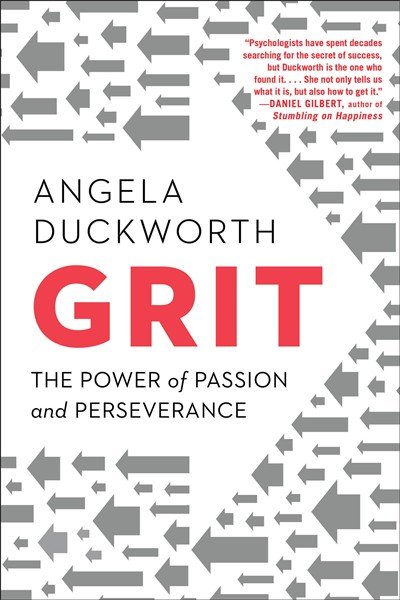
Success comes not from talent alone, but from grit—the combination of passion and perseverance for long-term goals. Effort counts twice: first in building skill, then in applying it to achieve results. Grit can be cultivated through four psychological assets (interest, practice, purpose and hope) and grows stronger when supported by wise parenting, structured activities and gritty cultures.
⭐ The One Thing
The one thing this book taught me: Talent × effort = skill, and skill × effort = achievement—therefore effort counts twice. No matter how naturally gifted you are, sustained effort over time matters more than raw ability. The people who rise to the top aren’t necessarily the most talented; they’re the ones who combine passion with perseverance and refuse to quit when things get hard.
💭 First Impressions
The West Point research immediately hooked me—the idea that psychological grit predicts success better than a comprehensive “Whole Candidate Score” challenges everything we assume about achievement. The Finnish sisu story and JPMorgan’s fortitude culture surprised me—grit transcends individual psychology and becomes cultural identity. The case studies resonated deeply, especially David Luong (the “not ready for advanced math” student who became a rocket scientist) and Will Smith’s treadmill philosophy.
🔑 Key Concepts
-
Grit = Passion + Perseverance: Not just working hard, but working hard toward a consistent, long-term goal. Passion isn’t intensity; it’s loyalty to your purpose over years and decades. Perseverance is resilience—getting back up after setbacks and maintaining daily discipline.
-
Effort Counts Twice: The dual impact of effort revolutionizes how we think about achievement. First, effort transforms your raw talent into skill through practice. Second, effort transforms that skill into tangible achievement through application. This explains why talented people who don’t work hard often underperform less talented grinders.
-
The Goal Hierarchy: Successful people organize goals in a pyramid—low-level goals (daily tasks) serve mid-level goals (instrumental steps), which all serve one top-level goal (ultimate purpose). This structure prevents distraction and ensures every action aligns with what matters most. Warren Buffett’s advice: avoid the 20 goals that distract from your top 5.
-
Growth Mindset as Foundation: People who believe abilities are fixed give up when faced with failure. People who believe abilities can be developed through effort persist through challenges. This mindset difference predicts grit and success across domains. Language matters: “I’m not good at this yet” vs. “I’m not good at this.”
-
Deliberate Practice vs. Flow: Two complementary experiences. Deliberate practice is for preparation—effortful, focused on weaknesses, with immediate feedback. Flow is for performance—effortless, intrinsically pleasurable, balance of challenge and skill. Gritty people do both: they practice deliberately to improve, then enter flow states during performance.
🧠 Mental Models & Frameworks
-
The Grit Formula: Use this when evaluating long-term commitment to goals. Apply the equation: talent × effort = skill; skill × effort = achievement. Effort appears twice, making it more important than raw talent. Stop obsessing over natural ability (yours or others’). Focus on sustained effort. When evaluating opportunities, ask “Will I keep showing up?” not “Am I talented enough?”
-
The Four Psychological Assets: Use this when developing grit from the inside out. Sequentially cultivate interest (intrinsic enjoyment), practice (daily discipline), purpose (other-centered meaning), and hope (growth mindset + optimistic explanatory style). Don’t expect instant passion. Start with curiosity, develop through practice, deepen when you discover how your work helps others, sustain through optimistic self-talk during setbacks.
-
Deliberate Practice Framework: Use this when moving from competence to mastery in any skill. Set specific stretch goals targeting weaknesses, apply full concentration and effort, get immediate informative feedback, and repeat with reflection and refinement. Dedicate 1-3 hours daily to focused practice on specific weaknesses. Make it habitual (same time, same place). Seek negative feedback aggressively. Stop when mentally exhausted.
-
Optimistic Explanatory Style: Use this when responding to setbacks and failures. Pessimists explain bad events as permanent and pervasive (“I’m a loser”). Optimists explain them as temporary and specific (“I didn’t manage my time well on this project”). After a failure, consciously reframe: What specific action caused this? What can I change next time? Avoid identity-based explanations in favor of behavior-based ones.
-
Parenting Styles Matrix: Use this when raising children, managing teams, or mentoring others. Two dimensions—support and demand. Wise parenting equals high support plus high demand (not either/or). Be demanding (set high standards, challenge people to grow) while being supportive (warm, respectful, encouraging). This combination produces grit and excellence.
💬 My Favorite Quotes
Talent × effort = skill; skill × effort = achievement. Therefore effort counts twice.
Grit is about working on something you care about so much that you’re willing to stay loyal to it—it’s doing what you love, but not just falling in love—staying in love.
The hope that gritty people have has nothing to do with luck and everything to do with getting up again.
🙋 Who Should Read It?
-
Parents raising children who are struggling with the balance between being supportive and demanding, wondering whether to push kids or let them find their own way, and worried about building resilience without crushing spirit.
-
Early-career professionals feeling stuck who are comparing themselves to “naturals” and feeling inadequate, questioning whether they’re in the right field, and struggling to maintain motivation when progress feels slow.
-
Educators and coaches working with students or athletes who have talent but lack follow-through, searching for research-backed methods to build perseverance and resilience, and wanting to create cultures of sustained excellence.
🔗 Additional Resources
Books Cited or Referenced:
- “Mindset: The New Psychology of Success” by Carol Dweck (growth vs. fixed mindset)
- “Learned Optimism” by Martin Seligman (optimistic explanatory style)
- “Flow: The Psychology of Optimal Experience” by Mihaly Csikszentmihalyi (flow states)
- “Peak: Secrets from the New Science of Expertise” by Anders Ericsson (deliberate practice)
Research Studies Referenced:
- Catharine Cox (1926): “The Early Mental Traits of Three Hundred Geniuses”
- Benjamin Bloom: “Developing Talent in Young People” (study of 120 world-class performers)
- Dan Chambliss: “The Mundanity of Excellence” (Olympic swimmers study)
Methodologies and Tools:
- The Grit Scale (10-item self-report questionnaire)
- Whole Candidate Score (West Point’s admission assessment)
- The Hard Thing Rule (family practice structure)
- Job crafting (Amy Wrzesniewski’s framework for redesigning work)