
⚡ The Lightning Summary
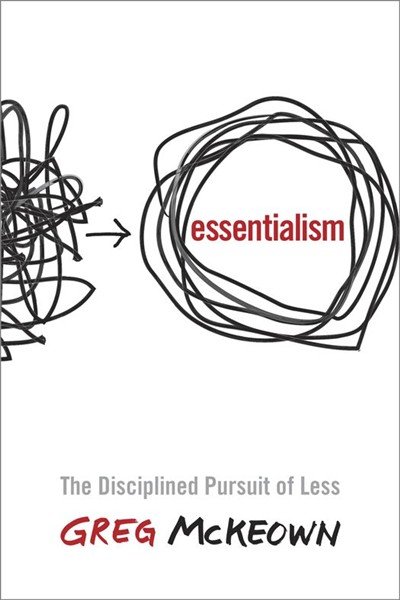
Stop trying to do everything. The disciplined pursuit of less but better means deliberately distinguishing the vital few from the trivial many, eliminating the nonessentials, and making execution of essential things almost effortless through systematic design.
⭐ The One Thing
The one thing this book taught me: Only once you give yourself permission to stop trying to do it all and stop saying yes to everyone can you make your highest contribution toward the things that really matter.
💭 First Impressions
What surprised me most was how much the book addresses the emotional and social awkwardness of essentialism, not just the logical framework. The core premise felt revolutionary yet obvious—we know we’re stretched too thin but rarely give ourselves permission to stop. The insight that if you don’t prioritize your life, someone else will completely reframed my relationship with my calendar and commitments.
🔑 Key Concepts
-
The Disciplined Pursuit of Less: Essentialism is not about how to get more things done; it’s about how to get the right things done. It doesn’t mean just doing less for the sake of less either. It is about making the wisest possible investment of your time and energy in order to operate at your highest point of contribution by doing only what is essential.
-
The Nonessentialist vs. Essentialist: The nonessentialist thinks almost everything is essential, tries to do it all, and makes a millimeter of progress in a million directions. The essentialist thinks almost everything is nonessential, does fewer things better, and makes significant progress in the direction that matters most. The difference is not in how many things you attempt, but in how much you actually accomplish.
-
The Trade-off Reality: We can’t have it all or do it all. Once we accept the reality of trade-offs we stop asking “how can I make it all work?” and start asking “which problem do I want to solve?” Trade-offs are not something to be ignored or decried. They are something to be embraced and made deliberately, strategically, and thoughtfully.
-
The 90 Percent Rule: When evaluating an option, think about the single most important criterion and then rate the option from 0 to 100. If it rates lower than 90 percent, automatically change it to 0 and reject it. This simple technique helps avoid the trap of pursuing “pretty good” opportunities that consume the resources that could be spent on truly exceptional ones.
-
The Power of Saying No Gracefully: The fear of disappointing others or being seen as unhelpful drives most of our nonessential commitments. Learning to say no gracefully and firmly is a skill that must be developed. Remember that when you say yes to something, you’re always saying no to something else—you’re just not always conscious of what.
🧠 Mental Models & Frameworks
-
Explore and Evaluate: Before committing to anything, explore your options broadly and evaluate them against strict criteria. Create space to discern what truly matters versus what merely appears to. Schedule time for thinking rather than just doing. Ask “Will this activity or effort make the highest possible contribution toward my goal?”
-
Eliminate Ruthlessly: Once you’ve identified what’s essential, eliminate everything else. Use the 90 percent rule for decisions. Learn to say no gracefully but firmly. Make peace with the trade-offs. Remove obstacles systematically. Edit your commitments like a newspaper editor cuts copy—without remorse and with clarity of purpose.
-
Execute Effortlessly: Design systems and routines that make execution of essentials almost automatic. Create buffers to account for unexpected obstacles. Subtract effort by removing friction from essential activities. Focus on being present in the moment rather than worrying about the future or past. Make progress visible to fuel further progress.
-
The Reverse Pilot: Instead of running a “pilot” to test whether to start something new, run a “reverse pilot” where you test whether something can be eliminated. Stop doing an activity for a week and see what happens. Often you’ll find that nothing negative occurs, revealing that the activity was nonessential.
-
Zero-Based Budgeting for Commitments: Rather than starting from last year’s commitments and tweaking, start from zero each period. Ask about each commitment: “If I weren’t already invested in this, how much would I invest in it now?” This prevents the endowment effect from keeping you attached to things that no longer serve you.
💬 My Favorite Quotes
If you don’t prioritize your life, someone else will.
Only once you give yourself permission to stop trying to do it all, to stop saying yes to everyone, can you make your highest contribution towards the things that really matter.
The way of the Essentialist means living by design, not by default. Instead of making choices reactively, the Essentialist deliberately distinguishes the vital few from the trivial many, eliminates the nonessentials and then removes obstacles so the essential things have clear, smooth passage.
🙋 Who Should Read It?
-
Overwhelmed professionals saying yes to everything who feel busy but unproductive, stretched thin across too many priorities, and sense they’re making a millimeter of progress in a million directions while making no real impact.
-
Leaders and managers drowning in meetings and requests who struggle to protect time for strategic thinking, find themselves reacting rather than leading, and need a framework for ruthless prioritization.
-
Anyone who struggles to say no and feels guilty about disappointing others, even when agreeing means sacrificing what matters most to them. The book provides both the philosophy and practical scripts for declining gracefully.
🔗 Additional Resources
Related Books:
- “The ONE Thing” by Gary Keller – Complementary focus on single priority
- “Deep Work” by Cal Newport – Extended focus and elimination of shallow work
- “The Dip” by Seth Godin – When to quit and when to persist
- “Atomic Habits” by James Clear – Systems for executing on essentials
Frameworks Referenced:
- Pareto Principle (80/20 rule)
- Zero-based budgeting applied to time
- Marie Kondo’s “Does it spark joy?” principle applied to commitments
Greg McKeown’s Resources:
- Essentialism podcast
- “Effortless” (follow-up book on execution)
- gregmckeown.com for tools and assessments