
⚡ The Lightning Summary
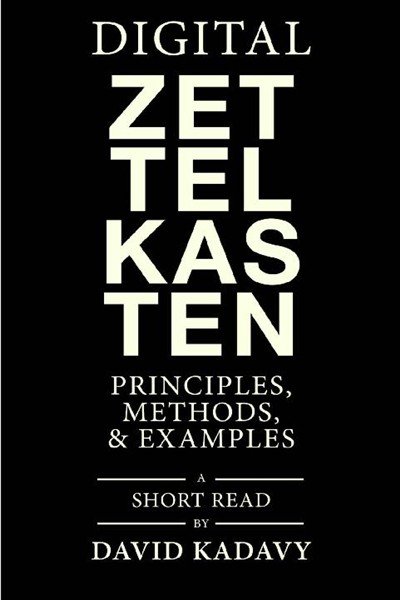
A practical guide to building a digital Zettelkasten (slip box) system that transforms scattered notes into writing output. Instead of letting information vanish after reading, the Zettelkasten method creates a “bicycle for the mind” that turns small, distraction-friendly activities into productive knowledge work, helping you retain what you read, retrieve it quickly and turn accumulated insights into articles and books.
⭐ The One Thing
The one thing this book taught me: A Zettelkasten is fundamentally about producing writing, not archiving knowledge. Every design decision (how you name files, choose keywords, link notes) should optimize for retrieving notes in contexts where you’ll want to use them in your writing, not for perfectly categorizing information like an archivist.
💭 First Impressions
The method hijacks short attention spans productively—processing small notes on your phone while waiting actually drives projects forward. The author’s honesty about limitations was refreshing, acknowledging he’s a non-fiction writer whose system reflects that bias. Initially skeptical about note-taking not ruining reading pleasure, but the author’s varied “mental states” argument was convincing.
🔑 Key Concepts
-
The Bicycle for the Mind: Steve Jobs envisioned computers as tools that amplify human capability like bicycles amplify movement. A digital Zettelkasten fulfills this promise by seamlessly connecting your thoughts with a database of everything interesting you’ve read or thought, creating tremendous output from small efforts without burning mental energy.
-
Low-Effort Production for Distracted Minds: The Zettelkasten method hijacks our short attention spans instead of fighting them. You can do small things with small notes on your phone during spare moments, consuming tiny bites of the most interesting things you’ve ever encountered. These tiny actions accumulate productively instead of adding up to nothing like social media scrolling.
-
Three Types of Notes Structure: Fleeting notes capture ideas on the fly. Literature notes condense entire sources into bullet-point summaries. Permanent notes explain single ideas with keywords and links to other notes. This progression from casual to refined creates a natural workflow that builds knowledge systematically.
-
Think Like a Writer, Not an Archivist: When choosing keywords, don’t ask “where should I store this?” but rather “in which circumstances will I want to stumble upon this note, even if I forget about it?” Generic tags like “Psychology” help others find notes, but specific tags like “Iceberg Principle” help you build arguments and collect raw materials for writing projects.
-
Plain-Text Future-Proofing: Using plain-text Markdown files with WikiLinks creates data portability, simplicity, lightweight storage, fast access, offline compatibility and future-proof durability. You can switch apps freely without vendor lock-in, and as long as there are computers, you’ll be able to read your notes.
🧠 Mental Models & Frameworks
-
Progressive Summarization: Use this when processing any important reading material. First read and highlight. Export highlights and highlight them again. Condense highlighted highlights into literature notes in your own words. Extract single ideas into permanent notes. This transforms reading from passive consumption into active knowledge building without overwhelming cognitive load at any single step.
-
The Iceberg Principle: Use this when evaluating writing quality and depth. Like an iceberg showing only one-eighth above water, great writing reveals a fraction of the knowledge behind it. The unseen seven-eighths adds grace and confidence. This reframes research not as material to dump into writing but as foundation that invisibly strengthens final output.
-
External Brain Design: Use this when building any knowledge management system. Instead of using brain power to remember and retrieve things, offload that to a system, freeing mental energy for creative thinking. The system should make retrieval effortless so you can focus on synthesis and generation.
-
Context-Matched Rituals: Use this when maintaining any productivity system long-term. Match different note-taking activities to different mental states and physical contexts. Read on e-reader before bed. Highlight highlights on computer in morning. Write permanent notes during peak focus time. This makes note-taking sustainable by distributing cognitive load across different energy levels and locations.
-
Writer’s Keywords vs Archivist’s Keywords: Use this when organizing any knowledge for future use. Archivist asks “which keyword fits best?” Writer asks “when will I want to find this?” This mental model transforms how you tag everything—from bookmarks to emails to notes—focusing on future utility rather than abstract organization.
💬 My Favorite Quotes
My digital Zettelkasten allows me to seamlessly engage my thoughts with a high-powered database of the most interesting things I’ve read or thought—things I know I know, but which are just beyond the reach of my consciousness.
The way people choose their keywords shows clearly if they think like an archivist or a writer. Do they wonder where to store a note or how to retrieve it? The archivist asks: Which keyword is the most fitting? A writer asks: In which circumstances will I want to stumble upon this note, even if I forget about it? It is a crucial difference.
A Zettelkasten helps you produce writing. Yes, a Zettelkasten helps you retain what you read—but so you can turn that knowledge into writing.
🙋 Who Should Read It?
-
Writers and knowledge workers struggling to turn reading into output who feel like they read constantly but can’t access that knowledge when writing, and whose read-it-later apps have become graveyards of good intentions.
-
Self-directed learners and academics building long-term projects who need to synthesize sources across months or years and feel frustrated forgetting books shortly after finishing them.
-
People paralyzed by tool selection who keep switching note-taking apps looking for the perfect system. The plain-text approach ends the search and starts the work.
🔗 Additional Resources
Books Referenced:
- “How to Take Smart Notes” by Sönke Ahrens
- “Indistractible” by Nir Eyal
- “Mind Management, Not Time Management” by David Kadavy
Methodologies and Concepts:
- Commonplace book method (Ryan Holiday’s approach)
- Getting Things Done (GTD) by David Allen
- Progressive Summarization by Tiago Forte
- Markdown language and WikiLinks/Freelink
Tools and Technologies:
- Readwise (highlight importing and exporting)
- Obsidian (plain-text note-taking with Zettelkasten features)
- Dropbox, iCloud, Google Drive (cloud syncing)
Key Figures:
- Niklas Luhmann (German sociologist who wrote 70 books using Zettelkasten)
- Steve Jobs (source of “bicycle for the mind” metaphor)
- Ernest Hemingway (example of the Iceberg Principle in writing)