⚡ The Lightning Summary
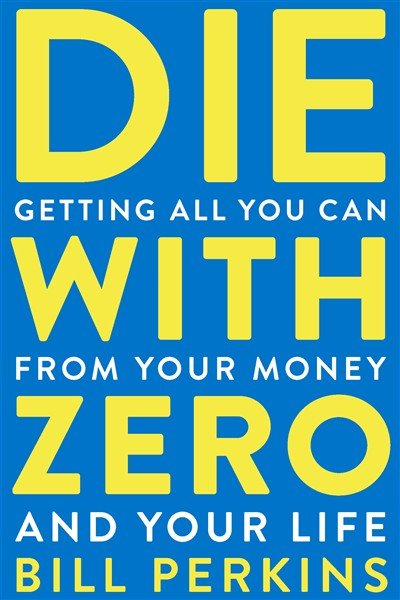
Most people save too much for too late, working years for money they’ll never spend while their health declines. Instead, deliberately plan to die with zero by converting life energy into peak experiences at optimal times, using time buckets to allocate money across declining health, investing early for memory dividends and giving to others when it creates maximum impact.
⭐ The One Thing
The one thing this book taught me: Your money represents stored life energy, and dying with wealth means you worked years for free. The goal isn’t dying broke but retiring on a wealth of memories, not money. Optimize for experience points across your lifetime, not net worth at death.
💭 First Impressions
The statistics on retiree spending are shocking, with 88% still having their savings 20 years into retirement. This is refreshingly quantitative for a life philosophy book, featuring actual formulas, calculators and survival thresholds. The memory dividend concept is the most valuable financial insight I’ve encountered, showing how experiences compound like investments.
🔑 Key Concepts
-
Life as Sum of Experiences: Your life isn’t defined by your wealth, career or possessions but by the totality of your experiences. Every peak moment, small pleasure and meaningful interaction contributes experience points to your lifetime fulfillment curve. Money is simply a tool to convert into experiences, nothing more. This reframing shifts the entire game from accumulation to allocation.
-
Memory Dividends: Experiences don’t just provide one-time value. They pay ongoing dividends through memories for the rest of your life. A trip at 30 compounds for 50+ years through reminiscing, photos, stories and shared memories with others. This makes early investment in experiences financially rational, like compound interest for your psyche. The earlier you invest, the longer the compounding period.
-
The Declining Utility of Money: Money becomes less useful as you age because health inevitably declines. $100,000 at 30 enables adventure travel, extreme sports and physically demanding experiences. $100,000 at 80 can’t buy back your knees, energy or mobility. This creates urgency to shift money to earlier years when it can purchase more fulfillment per dollar.
-
Time Buckets vs Bucket Lists: Bucket lists are reactive—you list everything without considering when. Time buckets are proactive planning tools—you divide life into 5-10 year intervals and assign experiences to appropriate ages based on health requirements, life stage and optimal timing. A bucket list says “climb Kilimanjaro someday.” Time buckets say “climb Kilimanjaro ages 35-45 while knees work.”
-
Net Worth Peak as Date: Most people think of peak net worth as a number to achieve. Perkins argues it should be a date, typically age 45-60 for most people. After this age, you should deliberately spend down wealth faster than you accumulate, ensuring money gets used while health permits maximum enjoyment rather than piling up for heirs or dying unused.
🧠 Mental Models & Frameworks
-
The Three Elements Model: Use this when making major life decisions about work, spending or lifestyle. Fulfillment requires three elements in balance: Health + Money + Free Time. Young people have health and time but little money. Middle years bring money but sacrifice time and health begins declining. Old age offers time and money but health is gone. Before accepting a high-paying job that consumes all your time, ask which element you’re trading and whether that trade makes sense for your current life phase.
-
Experience Points System: Use this when deciding how to spend money or time. Assign point values to experiences based on intensity and lasting impact. Peak experiences (first love, epic trip, major achievement) earn many points. Small pleasures (nice meal, movie) earn few. Your lifetime fulfillment equals the area under your experience curve. When choosing between saving money and booking an experience, calculate which adds more points to your lifetime curve.
-
Personal Interest Rate Calculation: Use this when deciding whether to delay or pursue an experience now. Your personal interest rate reflects how much premium you’d need to delay an experience. At 25, you might delay a trip for 10% return. At 65, you’d need 50%+ to delay because time is scarce and health uncertain. This rate rises with age, making delayed gratification increasingly irrational as you get older.
-
Survival Threshold Formula: Use this when planning retirement spending and calculating how much wealth to preserve. Survival Threshold = 0.7 × (Annual Survival Cost) × (Years Remaining). Determine minimum annual cost to stay alive (housing, food, basic healthcare). Multiply by remaining years and 0.7 safety factor. Anything above this threshold can and should be spent on experiences.
-
Memory Dividend Enhancement Strategy: Use this when maximizing return on experience investments. Boost memory dividends through deliberate actions. Take more photos, create albums, plan reunions, share stories regularly, document experiences in journals. The same initial experience pays larger dividends when you actively cultivate the memories. Consider who you share experiences with as they enable memory sharing for decades.
💬 My Favorite Quotes
This book is not about making your money grow. It’s about making your life grow.
Your money represents life energy. Life energy is all the hours that you’re alive to do things and whenever you work, you spend some of that finite life energy.
Give money to your children or to charity when it has the most impact.
🙋 Who Should Read It?
-
High-earning professionals in accumulation mode who’ve achieved financial success but feel increasingly empty despite growing net worth, especially those in their 30s-50s who can still act on the insights before their best years pass.
-
Aggressive savers and FIRE adherents optimizing purely for early retirement without considering whether they’re over-saving for a future that may never come or arrive with health too compromised to enjoy it.
-
Parents planning their estates who assume leaving maximum inheritance is their duty, without questioning whether giving earlier (ages 26-35) would create more impact than waiting until their kids are 60 and they’re dead.
🔗 Additional Resources
Books cited or referenced:
- The Ant and the Grasshopper (Aesop’s Fable)
- Predictably Irrational by Dan Ariely
- Stumbling on Happiness by Daniel Gilbert
- The Top Five Regrets of the Dying by Bronnie Ware
- Freakonomics by Steven Levitt and Stephen Dubner
Research studies referenced:
- Employee Benefit Research Institute (retiree spending study)
- Consumer Expenditure Survey (Bureau of Labor Statistics age-based spending data)
- Psychological studies on experiences vs material purchases
Tools and concepts:
- Life expectancy calculators (mortality tables)
- Annuities (insurance against outliving money)
- Time buckets (age-based experience planning)
- Experience points system
- Memory dividend framework