
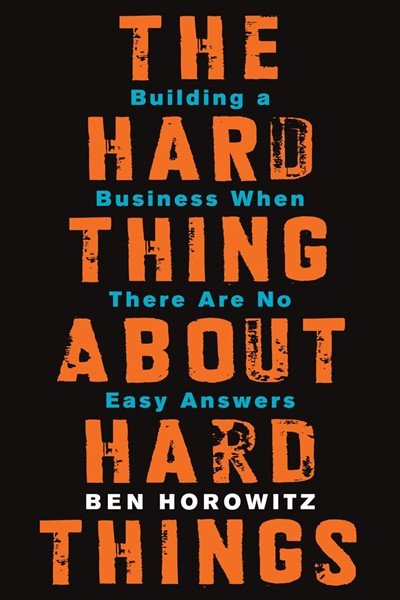
⚡ The Lightning Summary
The hard thing about hard things is there is no formula for dealing with them. Ben Horowitz shares his journey from founding Loudcloud through near-bankruptcy, multiple crises, and eventual sale to HP for $1.6 billion. The book provides raw, unfiltered guidance on the brutal challenges CEOs face—laying people off, firing executives, demoting friends, facing existential threats—that management books typically ignore. It’s about making decisions when there are no good options, leading through uncertainty, and surviving “The Struggle” that every entrepreneur faces.
⭐ The One Thing
The one thing this book taught me: Embrace the struggle. Life is struggle, and entrepreneurship amplifies this truth. The hard things are hard because there are no recipes, your emotions are at odds with your logic, and you cannot ask for help without showing weakness. Success comes not from avoiding these moments but from learning to make decisions and lead effectively when everything is falling apart. The CEO’s job is fundamentally to know what to do and get the company to do it—especially when the path forward is unclear.
💭 First Impressions
The hip-hop quotes initially seemed gimmicky but actually work—they capture the struggle, competitiveness and resilience central to entrepreneurship. The writing style is conversational and readable, like getting advice from a battle-tested mentor over drinks. This is the most brutally honest management book I’ve read—no sanitized success stories or formulaic advice.
🔑 Key Concepts
-
The Struggle: The existential crisis every entrepreneur faces when the dream turns into a nightmare. It’s when you wonder why you started the company, when employees think you’re lying, when food loses its taste. The Struggle is not a sign of weakness or failure—it’s the natural state of building something from nothing. You must accept it, embrace it and find ways to function within it rather than trying to avoid or deny it.
-
There Are No Silver Bullets, Only Lead Bullets: When facing existential threats, many look for clever pivots, acquisitions or shortcuts to avoid the core battle. But sometimes you just have to build a better product and fight through the front door. Lead bullets are the hard work of directly solving your biggest problems—improving your product, fixing fundamental issues and competing head-on.
-
Peacetime CEO vs Wartime CEO: These require fundamentally different leadership styles. Peacetime CEOs focus on expanding markets and reinforcing strengths through collaboration and consensus-building. Wartime CEOs face existential threats and must be directive, move fast and violate protocol when necessary. Most companies cycle between these states, and CEOs must adapt their approach accordingly.
-
The Right Way to Lay People Off: Layoffs are inevitable in startups but can destroy culture if done poorly. Key principles: Get your head right first, don’t delay, be clear it’s a company failure not individual performance, train managers to do it themselves, address the entire company clearly, and be visible afterward. The message is for the people who stay—they will judge you on how you treat those leaving.
-
Management Debt: Like technical debt, management debt is incurred when you make expedient short-term management decisions with expensive long-term consequences. Examples include putting two people in one role, overcompensating someone because they got another offer or avoiding performance management. These shortcuts may solve immediate problems but create organizational dysfunction that compounds over time.
🧠 Mental Models & Frameworks
-
The Black Box vs White Box Evaluation: Use this when evaluating CEO or leadership performance. Black box looks only at results against objectives (lagging indicators). White box examines how those results were achieved—does the CEO know what to do and can they get the company to do it? White box is predictive while black box is historical. Judge leaders on their decision-making process and organizational capability building, not just outcomes they may not fully control.
-
Ones and Twos Leadership: Use this for succession planning and understanding executive capabilities. “Ones” excel at knowing what to do—setting strategy and direction. “Twos” excel at getting the company to execute what needs to be done. Most organizations are run by Ones with teams of Twos reporting to them. Know whether you’re naturally a One or Two, and build complementary skills or surround yourself with people who have your opposite strength.
-
The Accountability vs Creativity Paradox: Use this when dealing with missed commitments from employees taking risks. If you prosecute people for missing commitments after taking creative risks, you discourage future risk-taking. If you don’t hold people accountable, hard workers feel like chumps. Resolution depends on employee seniority, degree of difficulty and quality of the risk taken. Judge missed results contextually—was it a good risk that didn’t pan out or a bad risk that should have been avoided?
-
Artificial Deadlines: Use this for complex negotiations or processes that could drag on indefinitely. Create forcing functions that require decisions and action within a specific timeframe, even if somewhat arbitrary. This prevents endless deliberation and forces parties to commit. When faced with decisions that could be debated forever, set a clear deadline and commit to deciding by then with whatever information you have.
💬 My Favorite Quotes
The hard thing isn’t setting a big, hairy, audacious goal. The hard thing is laying people off when you miss the big goal. The hard thing isn’t hiring great people. The hard thing is when those ‘great people’ develop a sense of entitlement and start demanding unreasonable things.
There’s no recipe for really complicated, dynamic situations. There’s no recipe for building a high-tech company. There’s no recipe for leading a group of people out of trouble. There’s no recipe for making a series of hit songs. That’s the hard thing about hard things. There is no formula for dealing with them.
Nobody cares. When things go wrong in your company, nobody cares. The media don’t care, your investors don’t care, your board doesn’t care, your employees don’t care and even your mama doesn’t care. All the mental energy you use to elaborate your misery would be far better used trying to find the one seemingly impossible way out of your current mess.
🙋 Who Should Read It?
-
Current founder-CEOs facing existential challenges, layoffs, competitive threats or crisis management decisions, or first-time CEOs struggling with the psychological burden of leadership who feel alone in their challenges and want an unvarnished view of what the journey actually entails.
-
Experienced managers who need to make difficult people decisions (firing executives, demoting friends, conducting layoffs), or leaders in “wartime” situations facing existential threats who need to shift from consensus-building to decisive action.
-
Executives, VCs and board members who want to understand what CEOs actually go through, or anyone who has read traditional management books and found them insufficient for the truly hard decisions they face.
🔗 Additional Resources
Books Cited or Referenced:
- High Output Management by Andy Grove
- Good to Great by Jim Collins
- Built to Last by Jim Collins
- Only the Paranoid Survive by Andy Grove
Key Mentors and Influences:
- Bill Campbell—Horowitz’s most important mentor and advisor
- Marc Andreessen—Cofounder and business partner
- Andy Grove—Intel CEO whose management philosophy deeply influenced Horowitz’s approach
- Michael Ovitz—Legendary dealmaker who advised on M&A strategy
Management Concepts and Frameworks:
- The Peter Principle and the Law of Crappy People
- Technical Debt vs Management Debt
- Good Product Manager/Bad Product Manager
Companies and Case Studies:
- Loudcloud/Opsware—Horowitz’s primary case study throughout
- Netscape—where Horowitz learned his craft
- Intel—exemplar of strong management culture under Andy Grove