
⚡ The Lightning Summary
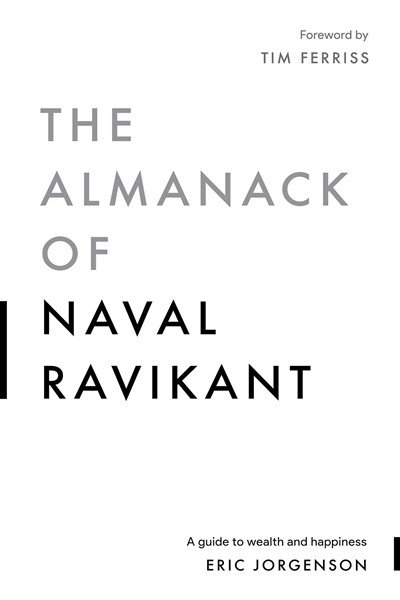
Naval Ravikant’s wisdom on building wealth and happiness through leverage, specific knowledge and clear thinking. Wealth comes from ownership and leverage (code, media, labor, capital). Happiness comes from eliminating desires and accepting reality. Both are learnable skills requiring long-term thinking, self-awareness and the courage to be yourself.
⭐ The One Thing
The one thing this book taught me: Freedom is the ultimate goal, and you achieve it by building specific knowledge with leverage while reducing your desires and learning to accept reality as it is. Wealth and happiness are not found but built through deliberate habits and clear thinking.
💭 First Impressions
The wealth section feels immediately actionable, while the happiness section requires deeper contemplation and practice. The emphasis on specific knowledge over hard work challenged conventional wisdom about success requiring grueling hours. Some concepts feel paradoxical at first (like “retirement is when today is complete in itself”) but reveal deeper truths on reflection.
🔑 Key Concepts
-
Specific Knowledge: This is knowledge that cannot be trained but can be learned. It comes from your genuine curiosity and passions, often things you did effortlessly as a kid. Society rewards you for knowing what only you know. No one can compete with you on being you. It’s found by pursuing your innate talents rather than chasing hot jobs.
-
Leverage: The three forms are labor (people working for you), capital (money multiplying your decisions) and products with no marginal cost of replication (code, media, books). The last is the most democratic and permissionless. You don’t need anyone’s permission to write code or create content. This is how you escape trading time for money.
-
Accountability: To get rich, you need leverage, and people only give you leverage when you take accountability. This means taking business risks under your own name. Society rewards you with responsibility, equity and leverage when you’re willing to be identified with your outcomes.
-
Long-Term Games: All returns in life come from compound interest. When you find the right people and the right thing to do, invest deeply and stick with it for decades. Play long-term games with long-term people. In long-term games, everybody is making each other rich. In short-term games, everybody is just making themselves rich.
-
Judgment Over Hard Work: In the age of leverage, one correct decision can win everything. Direction matters more than speed. If you’re 10% more right than someone else in your decisions, with leverage that can create millions in value. Clear thinking and wisdom (knowing long-term consequences) matter more than hours worked.
🧠 Mental Models & Frameworks
-
The Hourly Rate Framework: Use this for every decision about how to spend your time. Set a personal hourly rate (even aspirationally high like $5,000/hour) and ruthlessly refuse to do anything below that rate. Outsource, delegate or simply don’t do tasks that fall below your rate. This forces you to value your time properly and avoid the trap of “saving money” by wasting time on low-value tasks.
-
Desire as Suffering: Use this when feeling unhappy or restless. Recognize that desire is a contract you make with yourself to be unhappy until you get what you want. Choose your desires carefully and limit yourself to one big desire at a time. This makes you conscious of what you’re choosing to suffer for and whether that suffering is worth it.
-
The Four Types of Luck: Use this when building a career or business strategy. The four types are blind luck, luck from hustling, luck from preparation meeting opportunity, and luck from unique character attracting unique opportunities. Build your character so luck becomes destiny. Focus on becoming so good at something that opportunities seek you out rather than chasing opportunities randomly.
-
Principal-Agent Problem: Use this when evaluating business relationships and structures. Principals (owners) care deeply and do great work while agents (employees) optimize for different things. The smaller you can make the gap between principal and agent, the better the outcome. Align incentives to turn agents into principals. This helps you understand why ownership matters and how to structure deals so everyone acts like an owner.
-
If You Can’t Decide, The Answer is No: Use this for major life decisions (job, relationship, city, business partner). For important long-term decisions, you should feel a strong yes. If you’re making spreadsheets of pros and cons, that’s your brain telling you it’s not right. When it’s right, you’ll know. This saves years of regret by avoiding mediocre commitments that you knew deep down weren’t right.
💬 My Favorite Quotes
Seek wealth, not money or status. Wealth is having assets that earn while you sleep. Money is how we transfer time and wealth. Status is your place in the social hierarchy.
Play long-term games with long-term people. All returns in life, whether in wealth, relationships or knowledge, come from compound interest.
Desire is a contract you make with yourself to be unhappy until you get what you want.
🙋 Who Should Read It?
-
Entrepreneurs or aspiring entrepreneurs who feel trapped trading time for money and want to understand how to build real wealth through ownership and leverage.
-
Knowledge workers who are working hard but not seeing proportional returns and need to understand that judgment and direction matter more than effort in the modern economy.
-
People who have achieved external success but still feel unfulfilled and are searching for a more sustainable approach to happiness beyond achievement and acquisition.
🔗 Additional Resources
Thinkers and Authors Referenced:
- Charlie Munger (mental models, decision-making frameworks)
- Nassim Taleb (black swans, antifragility, probability)
- Warren Buffett (long-term investing, patience, judgment)
- Richard Feynman (first principles thinking, clear explanations)
- Benjamin Franklin (practical wisdom, virtue development)
Key Concepts to Explore Further:
- Complexity theory and systems thinking
- Principal-agent problem in microeconomics
- Game theory and positive-sum vs zero-sum games
- Compound interest and exponential growth
- Hedonic adaptation and the hedonic treadmill
- Stoic philosophy on acceptance and control
- Buddhist concepts of desire and suffering
Related Books:
- “Poor Charlie’s Almanack” by Charlie Munger
- “Antifragile” by Nassim Taleb
- “Influence” by Robert Cialdini
- “Meditations” by Marcus Aurelius