
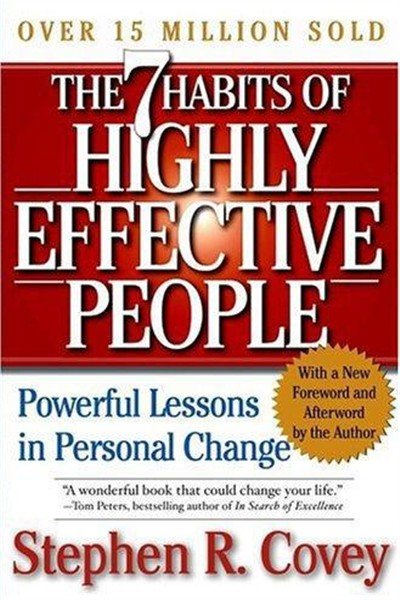
⚡ The Lightning Summary
The 7 Habits of Highly Effective People is a principle-centered, character-based approach to personal and interpersonal effectiveness. Covey presents a sequential framework for moving from dependence to independence (Private Victory) and then to interdependence (Public Victory). The core thesis: true effectiveness comes from aligning your life with timeless principles, not personality techniques or quick fixes. The seven habits work synergistically: Be Proactive, Begin with the End in Mind, Put First Things First (independence), Think Win/Win, Seek First to Understand Then to Be Understood, Synergize (interdependence), and Sharpen the Saw (renewal). Through the inside-out approach, Covey argues that lasting change requires working on your character, paradigms and motives first, then your behavior and relationships naturally transform.
⭐ The One Thing
If you embrace only one concept: Inside-out transformation precedes outside-in results. To change your circumstances, relationships and effectiveness, you must first change yourself, your paradigms, character and motives. Work on being rather than having. Private victories (mastering yourself) must precede public victories (successful relationships). You cannot fake character, and all the personality techniques in the world won’t compensate for fundamental character flaws. The principles are unchanging; the real power comes from internalizing them into your character and creating habits that express those principles daily.
💭 First Impressions
The book demolished my assumptions about effectiveness. I expected time management tips but got a journey into character development and paradigm shifts. The opening story about Covey’s son was disarmingly honest and powerful, while the funeral visualization exercise hit hard, forcing me to confront the gap between how I’m living and what truly matters. What surprised me most was the Maturity Continuum challenging my assumption that independence was the ultimate goal. The distinction between Character Ethic and Personality Ethic reframed everything I knew about success, and Covey’s intellectual honesty about requiring fundamental changes (not promising overnight transformation) was refreshing.
🔑 Key Concepts
-
Character Ethic vs. Personality Ethic: For 150 years, success literature focused on the Character Ethic, fundamental principles like integrity, humility, courage and justice. After World War I, focus shifted to the Personality Ethic: techniques, public image and influence strategies. You cannot use personality techniques to compensate for character flaws. Your duplicity will eventually be exposed, and everything will be perceived as manipulative. Work on primary greatness (character) before secondary greatness (public recognition).
-
Paradigms and Paradigm Shifts: A paradigm is your mental map of reality. We see the world not as it is, but as we are. Covey’s subway story illustrates this: his paradigm shifted instantly from irritation to compassion when he learned the disruptive man’s wife had just died. Minor life changes require attitude adjustments; quantum changes require paradigm shifts. The more our paradigms align with correct principles, the more accurate and functional they will be.
-
The Maturity Continuum: Human development progresses from Dependence (needing others) to Independence (self-reliant) to Interdependence (cooperative relationships). Most people never achieve true independence, but those who do sometimes get stuck there. Interdependence is a choice only independent people can make. You must first achieve independence (Private Victory through Habits 1-3) before being effective in interdependent situations (Public Victory through Habits 4-6).
-
P/PC Balance: True effectiveness balances Production (the golden eggs, desired results) with Production Capability (the goose, the ability to produce). The farmer who kills the goose destroys his capability in pursuit of immediate production. This applies to physical, financial and human assets. Taking the golden egg approach with relationships damages trust and development.
-
Inside-Out Approach: Start with self, your paradigms, character and motives, before working on behavior and techniques. If you want to be trusted, be trustworthy. If you want a cooperative teenager, be understanding and consistent. Private victories precede public victories. You cannot improve relationships before improving yourself. It’s futile to put personality ahead of character.
🧠 Mental Models & Frameworks
-
The Circle of Influence and Circle of Concern: Your Circle of Concern contains everything you care about. Your smaller Circle of Influence contains things you can actually do something about. Reactive people focus on the Circle of Concern (blaming, accusing), causing their influence to shrink. Proactive people focus on the Circle of Influence, work on things they can control, and watch it expand. Where you focus reveals your degree of proactivity.
-
The Time Management Matrix: Activities fall into four quadrants based on urgent/not urgent and important/not important. Quadrant I (urgent and important) creates stress and burnout. Quadrant II (not urgent but important) is the heart of effective management: prevention, relationship building, planning. Quadrants III and IV are deception and escape. Effective people shrink Quadrant I by spending more time in Quadrant II. You need a bigger “yes” burning inside to say no to the unimportant.
-
Emotional Bank Account: Every interaction is a deposit or withdrawal in a trust account with that person. High balance means easy communication, flexibility and forgiveness. Overdrawn means walking on eggshells and measuring every word. Six major deposits: understanding the individual, attending to little things, keeping commitments, clarifying expectations, showing personal integrity, and apologizing sincerely when you make a withdrawal.
-
The Six Paradigms of Human Interaction: Win/Win seeks mutual benefit (abundance mentality). Win/Lose is competitive (scarcity mentality). Lose/Win has no standards, eager to please. Lose/Lose is vindictive. Win focuses only on getting what you want. Win/Win or No Deal provides emotional freedom, agreeing to disagree if mutual benefit isn’t possible. Win/Win requires maturity (courage balanced with consideration) and abundance mentality.
-
The Four Dimensions of Renewal: Habit 7 maintains your greatest asset through physical renewal (exercise, nutrition, stress management), spiritual renewal (meditation, values clarification, nature), mental renewal (reading, writing, teaching), and social/emotional renewal (service, empathy, synergy). These dimensions are interrelated; renewal in one facilitates renewal in others. This is the single most powerful investment you can make.
💬 My Favorite Quotes
Between stimulus and response, man has the freedom to choose.
The way we see the problem is the problem.
Private victories precede public victories.
🙋 Who Should Read It?
-
Leaders, managers and parents who want to move beyond quick-fix techniques to build sustainable effectiveness based on character and principles. Anyone tired of manipulative tactics that damage trust and relationships, or seeking to transform parenting from control to nurturing growth.
-
Anyone feeling stuck or ineffective despite working hard, climbing the ladder only to discover it’s against the wrong wall. People in troubled relationships (marriage, family, work) who need frameworks like the Emotional Bank Account, Win/Win thinking and empathic listening to rebuild trust.
-
Students, young professionals and self-help skeptics who want fundamental transformation rather than cosmetic changes. This establishes a principle-centered foundation early rather than having to unlearn reactive patterns later, backed by research and logical frameworks rather than platitudes.
🔗 Additional Resources
Related Books:
- “Man’s Search for Meaning” by Viktor Frankl – The source of Covey’s key insight about stimulus and response
- “How to Win Friends and Influence People” by Dale Carnegie – A classic of the Personality Ethic that Covey critiques
- “The Effective Executive” by Peter Drucker – Source of “doing things right vs. doing the right things”
- “Getting to Yes” by Roger Fisher and William Ury – Expands on principled negotiation and Win/Win thinking
- “Deep Work” by Cal Newport – Modern take on Quadrant II focus and attention management
Covey’s Other Works:
- “First Things First” – Deep dive into Habit 3 and Quadrant II time management
- “Principle-Centered Leadership” – Applies the 7 Habits framework to organizational leadership
- “The 7 Habits of Highly Effective Families” – Adapts the framework specifically for family life
Modern Applications:
- “Atomic Habits” by James Clear – Complements Covey’s habit framework with neuroscience-based techniques
- “Nonviolent Communication” by Marshall Rosenberg – Expands on empathic listening (Habit 5)
- “The Speed of Trust” by Stephen M.R. Covey – Expands on the Emotional Bank Account concept