⚡ The Lightning Summary
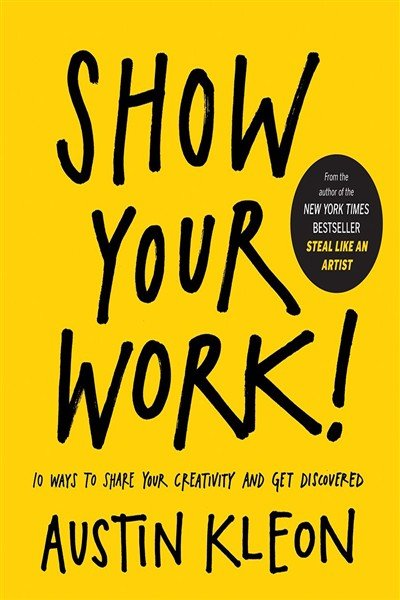
Being talented isn’t enough—you need to be findable. This book teaches you how to build an audience by sharing your creative process openly and consistently online. Instead of hoarding your work until it’s perfect, share something small every day, tell good stories about what you’re making, teach what you know, and cultivate genuine connections with people who share your interests. It’s not about self-promotion or networking—it’s about being generous with your work and letting people discover you through what you create and share.
⭐ The One Thing
The one thing this book taught me: You don’t find an audience for your work—they find you. But you have to be findable. This means consistently sharing your process, your influences, your learning journey and your work in progress. The act of showing your work is how you build meaningful connections and create opportunities, not by schmoozing at networking events or waiting until everything is perfect.
💭 First Impressions
The advice to read obituaries every morning is surprisingly profound—it’s a daily reminder of mortality that motivates action without requiring an actual near-death experience. The concept of “scenius” instead of genius immediately reframes creativity as collaborative and accessible rather than mystical and elite. Some advice feels obvious (don’t share everything online, proofread your writing) but the book acknowledges this—sometimes we need reminders of basic principles.
🔑 Key Concepts
-
Scenius Over Genius: Creativity isn’t about lone geniuses working in isolation—it’s about “scenius,” an ecology of talent where creative individuals support each other, share ideas, steal from one another and contribute to a collaborative environment. This reframes creativity from an individual achievement to a community contribution, making it accessible to everyone regardless of talent level. What matters is what you contribute—the ideas you share, the connections you make and the conversations you start.
-
Process Over Product: Don’t wait until your work is perfect to share it. People are interested in how things are made, not just the finished result. By sharing your process—your influences, methods, works-in-progress, failures and learning journey—you form a unique bond with your audience. This transforms your creative practice from a private activity to a public conversation, allowing people to connect with you as a human being rather than just consuming your finished products.
-
The Daily Dispatch: Share something small from your work every single day. This doesn’t mean sharing everything or oversharing personal details—it means finding one meaningful piece from your documentation (your influences, methods, works-in-progress or completed projects) and putting it out into the world. This daily habit keeps you visible, builds momentum and creates a body of work over time that becomes its own portfolio and proof of your dedication.
-
Attribution as Generosity: When you share the work of others, treat it with the same care you’d want for your own work. Good attribution means providing context—what the work is, who made it, how they made it, when and where it was made, why you’re sharing it and where people can find more. Always include hyperlinks to original sources. If you can’t properly credit something, don’t share it. This builds trust and strengthens the creative community you’re part of.
-
Selling Without Selling Out: Making money from your work doesn’t diminish its value or make you a sell-out. When you’ve built an audience by generously sharing your process and teaching what you know, asking them to support you financially is a natural next step. Whether through donations, crowdfunding or selling products and services, the key is to charge fairly for work you believe has genuine value. The business model supports the creative work, not the other way around.
🧠 Mental Models & Frameworks
-
Stock and Flow: Use this when planning content strategy and managing creative output. Flow is your daily stream of posts, tweets and updates that remind people you exist. Stock is the durable content that remains valuable months or years later—the work that people discover via search and that builds your reputation over time. Maintain your flow while working on stock in the background, then turn your flow into stock by collecting and organizing your daily thoughts into larger, more substantial pieces. Treat social media and quick posts as thinking-out-loud notebooks, then periodically review them to identify patterns and themes that can be expanded into blog posts, articles or even books.
-
The Vampire Test: Use this when deciding which relationships, projects or activities to pursue or avoid. After spending time with a person, working on a project or engaging in an activity, assess your energy level. If you feel worn out and depleted, that’s a vampire—eliminate it from your life. If you still feel full of energy, it’s not a vampire—keep it. This works for people, jobs, hobbies, places and any other commitment in your life. After every meeting, project or social engagement, do a quick energy check and ruthlessly eliminate the energy vampires to make room for more of what gives you life.
-
The Three-Act Pitch: Use this when presenting unfinished work, requesting funding or support, or pitching any project where you need someone else’s help. Act One is the past—where you’ve been, what you want, how you came to want it and what you’ve done so far. Act Two is the present—where you are now and how you’ve worked hard and used most of your resources. Act Three is the future—where you’re going and exactly how the person you’re pitching can help you get there. This structure turns your listener into the hero who decides how the story ends. Frame every ask or request as a story with these three acts, making it clear how the other person’s contribution will complete the narrative.
-
The “So What?” Test: Use this before sharing anything online—posts, articles, images, videos or any content. Before posting, ask yourself: “So what?” Is this helpful? Is it entertaining? Is it something you’d be comfortable with your boss or mother seeing? If you’re unsure, save it as a draft and revisit it 24 hours later with fresh eyes. The test filters out content that’s self-indulgent, boring or potentially embarrassing, ensuring that what you share adds value to your audience. Make “So what?” your internal gatekeeper—if you can’t articulate why someone else should care about what you’re posting, it’s probably not worth posting.
-
Chain-Smoking Projects: Use this when maintaining creative momentum and avoiding career stalls. Instead of taking breaks between projects, waiting for feedback or worrying about what’s next, use the end of one project to immediately light up the next one. When you finish something, ask yourself what you missed, what you could have done better or what you couldn’t get to, then jump straight into the next project without pause. This prevents the loss of momentum that comes from stopping and starting. At the completion of every project, immediately identify the next thing you want to work on—even before getting feedback on what you just finished.
💬 My Favorite Quotes
Creativity is not a talent. It is a way of operating.
The only way to find your voice is to use it. It’s hardwired, built into you. Talk about the things you love. Your voice will follow.
Teaching people doesn’t subtract value from what you do, it actually adds to it. When you teach someone how to do your work, you are, in effect, generating more interest in your work.
🙋 Who Should Read It?
-
Creatives struggling with self-promotion anxiety who hate the idea of marketing themselves but know they need to build an audience, or anyone building a personal brand who feels stuck between being too self-promotional and being invisible.
-
Early-career professionals, students and career changers in creative fields who have work they’re proud of but don’t know how to get it in front of the right people or build credibility before having impressive credentials.
-
Knowledge workers, freelancers and experienced professionals who want to document and share their learning journey, maintain visibility in their field, or have accumulated valuable knowledge they’ve kept to themselves.
🔗 Additional Resources
Books Cited by Author:
- Brian Eno, “A Year With Swollen Appendices”
- Steven Johnson, “Where Good Ideas Come From”
- David Byrne, “How Music Works”
- Mike Monteiro, “Design Is a Job”
- Kio Stark, “Don’t Go Back to School”
- Clay Shirky, “Cognitive Surplus”
- David Bayles and Ted Orland, “Art and Fear”
- Jason Fried and David Heinemeier Hansson, “Rework”
Related Thinkers and Experts:
- Steve Martin on focusing on excellence over self-promotion
- John Cleese on creativity as a way of operating
- Brian Eno on “scenius” and collaborative creativity
- Brené Brown on vulnerability and connection
- Robin Sloan on “stock and flow” as media metaphor
Complementary Frameworks:
- Personal Knowledge Management systems for documenting process
- Content marketing strategies for audience building
- Community building principles
- Story structure templates and narrative frameworks