
⚡ The Lightning Summary
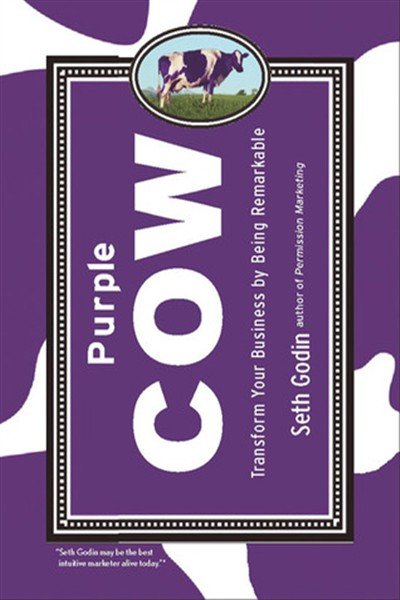
Traditional marketing is dead. In an overcrowded marketplace where consumers ignore advertising and have everything they need, only remarkable products survive. Stop trying to please everyone with a boring brown cow and build a Purple Cow instead—something so exceptional people can’t help but talk about it.
⭐ The One Thing
The one thing this book taught me: Remarkable isn’t a marketing tactic you add later—it’s a fundamental product quality you design in from the start. Being safe and invisible kills businesses faster than being polarizing and remarkable.
💭 First Impressions
The examples of market saturation (100+ aspirin brands, 500+ yoga books) hit hard and served as a sobering reality check that made me rethink “just advertise more” as a strategy. Once Godin articulates the core message, you realize you’ve been living this truth as a consumer but ignoring it as a marketer—revolutionary yet obvious. The provocative tone with statements like “Stop advertising and start innovating” is the kind of bold message that either inspires or irritates, depending on your investment in traditional marketing.
🔑 Key Concepts
-
The Purple Cow: A product or service that’s remarkable enough to make people stop and stare, just like a purple cow in a field of ordinary brown cows. Remarkable means worth making a remark about. This isn’t about being weird for weird’s sake—it’s about being so exceptional that you cut through the noise of a saturated marketplace.
-
The TV-Industrial Complex is Dead: The symbiotic relationship between consumer demand, TV advertising and ever-growing marketing budgets has collapsed. Consumers are bombarded with too many choices, have too little time, and have learned to ignore interruption-based advertising. The old formula of “make a decent product + buy lots of TV ads = success” no longer works.
-
The Postconsumption Consumer: We’ve reached a point where most people in developed markets have what they need and want very little more. They’re too busy to research new offerings and only pay attention when something truly solves a current problem or is so remarkable they can’t ignore it.
-
Built-in Remarkability: Marketing is no longer about taking a finished product and promoting it. True remarkable marketing means designing the remarkable element into the product or service itself from the beginning. If your offering isn’t remarkable at its core, no amount of marketing will make it visible in today’s marketplace.
-
Safe is Risky: The most dangerous business strategy today is playing it safe and trying to appeal to everyone. By attempting to offend no one and please everyone, you create something boring and invisible. Being polarizing and remarkable to a specific audience is safer than being bland to a broad audience.
🧠 Mental Models & Frameworks
-
The Innovation Diffusion Curve: Use this when launching new products or ideas. Ideas spread through populations in a predictable pattern—from innovators (2.5%) to early adopters (13.5%) to early majority (34%) to late majority (34%) to laggards (16%). Focus on innovators and early adopters first, as they’re the ones who spread ideas to the masses. Stop trying to convince everyone at once and design for the early adopters who will become your evangelists.
-
Before/During/After Advertising Framework: Use this when understanding marketing evolution and strategy. Before advertising, word of mouth drove sales. During advertising (the TV era), mass marketing and interruption worked because consumers had attention and few choices. After advertising (now), we’re back to word of mouth but amplified through networks at rocket speed. Recognize we’re in the “After” phase and focus on creating spreadable ideas rather than buying more ads.
-
The Four Customer Types: Use this for customer relationship and retention strategy. Every person falls into one of four categories—prospects (never bought), customers (bought once), loyal customers (buy repeatedly), and former customers. It’s cheaper to keep loyal customers than acquire new ones, so focus on deepening relationships with existing customers who will spread the word.
-
The Squeeze Play: Use this when diagnosing why marketing isn’t working. Marketers face a double squeeze—they can’t get the message out because consumers ignore advertising, while consumers rely on trusted suppliers and friend networks instead of studying ads. Meanwhile, competitors with market share overspend to defend their position. When marketing efforts fail, recognize you’re likely caught in the squeeze and need to shift to remarkable products that generate organic word of mouth.
-
The Otaku Filter: Use this when identifying target markets and product-market fit. “Otaku” refers to obsessive fans who are passionate about a specific thing. Instead of targeting broad markets, identify the small group of people who will be fanatically obsessed with what you offer. Ask “who will be obsessed with this?” rather than “how many people might buy this?” and design for the obsessed, not the masses.
💬 My Favorite Quotes
Something remarkable is worth talking about. Worth noticing. Exceptional. New. Interesting. It’s a Purple Cow. Boring stuff is invisible. It’s a brown cow.
Remarkable marketing is the art of building things worth noticing right into your product or service. Not slapping on marketing as a last-minute add-on, but understanding that if your offering itself isn’t remarkable, it’s invisible.
Stop advertising and start innovating.
🙋 Who Should Read It?
-
Entrepreneurs and startup founders struggling to get traction despite trying traditional marketing, or marketing professionals watching advertising ROI decline year after year while being told to just spend more on ads.
-
Product managers and designers who keep building bland, me-too products based on what competitors are doing, or small business owners competing against bigger companies with larger marketing budgets who can’t outspend the competition.
-
Anyone launching anything new in a crowded market where people already have multiple solutions. If you need to stand out and grow, the Purple Cow strategy provides ammunition for why remarkable beats safe.
🔗 Additional Resources
Books Referenced:
- “The Pursuit of Wow” by Tom Peters
- “The One to One Future” by Peppers and Rogers
- “Crossing the Chasm” by Geoffrey Moore
- “The Tipping Point” by Malcolm Gladwell
- “Unleashing the Ideavirus” by Seth Godin
- “Permission Marketing” by Seth Godin
Complementary Frameworks:
- Blue Ocean Strategy (creating uncontested market space)
- Jobs To Be Done Theory (understanding what job customers hire your product to do)
- The Lean Startup (build-measure-learn cycles)
Related Concepts:
- Viral marketing and network effects
- Word-of-mouth marketing strategies
- Product-led growth
- Niche domination strategies
- Positioning and differentiation theory