
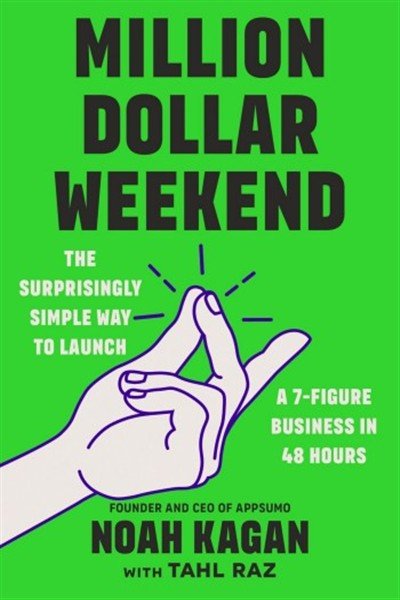
⚡ The Lightning Summary
Anyone can launch a profitable business in 48 hours by following this three-step process: Find a problem people will pay to solve, validate market potential with simple research and presell your solution to get paying customers BEFORE building anything. The key is overcoming two core fears (starting and asking), taking action immediately rather than planning endlessly and focusing on customers first instead of products. Experimentation beats perfection every time.
⭐ The One Thing
The one thing this book taught me: Get 3 paying customers in 48 hours before building anything. This single rule eliminates the waste that kills most startups—spending months building products nobody wants. If you can get people to pay you just by describing your solution, you have a real business. If you can’t get 3 people to pay in 48 hours, pivot immediately rather than wasting months on the wrong idea. Validation-first thinking changes everything.
💭 First Impressions
Noah’s vulnerability about being fired from Facebook and losing $100M made the advice feel earned, not theoretical. The Sumo Jerky validation story—$4,040 in 24 hours by just emailing people—demolished my assumptions about needing perfect products before selling. The “NOW, Not How” mindset shift was simple but profound, and I caught myself overthinking constantly after reading this.
🔑 Key Concepts
-
Customer First vs. Founder First: Most entrepreneurs build products then search for customers (doomed approach). Instead, find customers first, understand their problems and only then build solutions. Start with WHO you’re selling to, WHAT problem you’re solving and WHERE those people are. This single mindset shift prevents building products nobody wants.
-
The Golden Rule of Validation: Find 3 customers in 48 hours who will give you money. Not promises, not interest—actual money. The 48-hour limit forces creativity and cuts off endless doubting. The first customer might be a friend, the second a family member, but the 3rd is always hard and proves real demand. If you can’t get 3 people to pay by just describing the solution, don’t build it.
-
NOW, Not How: Stop planning your way into confidence and start acting your way there. Most people overthink first and act later (analysis paralysis). Successful entrepreneurs act first and figure it out later. You only understand something after doing it, not before. Analysis ahead of action is pure speculation. Every time you catch yourself asking “How do I…?” replace it with “What can I do NOW?”
-
Freedom Number: Calculate the exact monthly revenue that gives you freedom (housing + food + savings). Noah’s was $3,000/month for years. This number makes goals concrete and urgent, focuses you on getting customers (not vague dreams) and creates a doable target that builds confidence. Monthly urgency beats distant annual goals.
-
The Law of 100: Commit to doing 100 reps before thinking of stopping (100 videos, 100 emails, 100 customer pitches). Stops you from succumbing to “the dip” between starting and mastery. The quantity group always beats the quality group because they experiment more and learn from more mistakes. Focus on consistency over results for the first 100.
🧠 Mental Models & Frameworks
-
The Million Dollar Weekend Process: Use this when validating any new business idea before investing time or money. The process involves three steps: find a problem people are having that you can solve, craft an irresistible solution backed by simple market research (Google Trends + Facebook Ads), and spend no money to validate by preselling before building. Before building your next product, spend 48 hours preselling to your Dream Ten list—if you can’t get 3 paying customers from people who know you, you definitely can’t get customers from strangers.
-
The One-Minute Business Model: Use this when quickly assessing if an idea is worth pursuing. Calculate Revenue minus Cost equals Profit per unit, then divide target profit by profit per unit to see total sales needed. Adjust the six revenue dials (average order value, frequency, price point, customer type, product line, add-on services) until the math works. You can eliminate bad ideas in 60 seconds by working backwards from your Freedom Number.
-
Content Circle Framework: Use this when building an audience in a new niche. Start with Core Circle (very narrow niche audience desperate for your specific expertise), expand to Medium Circle (broader but overlapping audience), then Large Circle (largest related audience). The formula combines the outcome you’ll deliver with your target market. Instead of creating generic content for everyone, start hyper-specific to build authority before expanding.
-
Rejection Goals Framework: Use this when overcoming fear of asking and selling. Aim for 100 rejections per week and reframe rejection as treasure to collect. The upside of asking is unlimited while the downside is minimal (embarrassment fades fast). Practice through the Coffee Challenge (ask for 10% off) and Dollar Challenge (get someone to invest $1). Track rejections like wins—gamifying rejection makes selling less emotionally charged and more mechanical.
-
Experiment-Based Marketing: Use this when growing past your first customers. Create a Marketing Experiment List with expected sales for each channel. Try the top 2-3 experiments simultaneously for 30 days, track actual vs. expected results, find what works and double down, and kill what doesn’t work fast. Let data decide strategy rather than randomly posting on social media hoping something works.
💬 My Favorite Quotes
Most people never pick up the phone, most people never ask. And that’s what separates the people that do things from the people that just dream about them. You gotta act. And you gotta be willing to fail.
Show me an experimenter, and over the long run, I’ll show you a future winner.
If you fail to plan, you are planning to fail.
🙋 Who Should Read It?
-
Aspiring entrepreneurs paralyzed by analysis spending months researching, planning and “learning” before taking any real action, convinced they need more preparation, better ideas or perfect circumstances. This book gives permission to start now with concrete 48-hour challenges that force you past overthinking into actual validation with real customers.
-
Product builders with no customers who have spent months building features in isolation but can’t get anyone to pay. They keep adding “one more thing” before launching and need Customer First methodology to work backwards from real demand instead of forward from imagined solutions.
-
Side hustlers who’ve tried and quit after starting multiple projects but abandoning each after a few weeks when they didn’t immediately work. They struggle with “the dip” between initial excitement and actual mastery and need the Law of 100 framework to push through the boring middle where most people quit prematurely.
🔗 Additional Resources
Books Referenced or Related:
- “The 4-Hour Workweek” by Tim Ferriss
- “The Lean Startup” by Eric Ries
- “The Dip” by Seth Godin
- “How to Win Friends and Influence People” by Dale Carnegie
- “The Mom Test” by Rob Fitzpatrick
- “Traction” by Gabriel Weinberg and Justin Mares
- “$100 Startup” by Chris Guillebeau
People and Prefluencers Referenced:
- Tim Ferriss (author, early AppSumo supporter)
- Ramit Sethi (I Will Teach You to Be Rich)
- Andrew Chen (growth expert, now VC at Andreessen Horowitz)
- Shaan Puri (entrepreneur, podcaster)
- Ali Abdaal (YouTuber with Content Circle Framework)
- Seth Godin (marketing thought leader)