
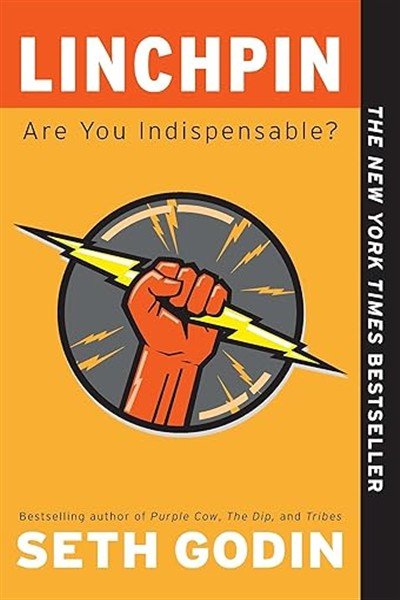
⚡ The Lightning Summary
The industrial era bargain—trade obedience for security—is dead. The new economy demands linchpins: indispensable people who bring emotional labor, creativity, genuine connection, and art to their work. Everyone has genius, but schools and systems trained it out. Your lizard brain (the resistance) blocks remarkable work through fear and perfectionism. Overcome it by shipping consistently, giving generous gifts, making authentic connections, and choosing to be indispensable rather than merely competent.
⭐ The One Thing
The one thing this book taught me: Being indispensable is not about talent or birth—it’s a choice to do emotional labor, create art, and ship your work despite the biological resistance that makes remarkable work feel dangerous. You weren’t born to be a cog in a machine; you were trained to become one, and you can choose to stop being one.
💭 First Impressions
The gift economy insight is profound. The idea that generosity creates indispensability in the digital age contradicts everything about transactions and “protecting your ideas,” yet the examples (Shepard Fairey, Keller Williams) prove it works. The lizard brain framework is instantly useful—naming the resistance as a biological force (the amygdala protecting you from social rejection) makes it easier to recognize and overcome rather than seeing it as a character flaw. The permission-giving feels radical. Being told “you are a genius” repeatedly throughout the book is uncomfortable yet necessary—it challenges the internalized narrative that genius belongs to others.
🔑 Key Concepts
-
The Linchpin Concept: A linchpin is someone who is indispensable to an organization—impossible to replace because they bring humanity, connection, and art, not just labor. Like the linchpin in a wheel that holds everything together, these people create forward motion and leadership. In the new economy, being average is riskier than being remarkable because average work can be outsourced or automated.
-
The Resistance (Lizard Brain): The amygdala and older brain systems prioritize survival by avoiding social rejection and physical danger. This “lizard brain” manifests as fear, procrastination, perfectionism, and comfort-seeking—blocking creativity, risk-taking, and emotional connection. It’s not a character flaw but a biological force that can be overcome by naming it, staying present, and shipping despite fear.
-
Emotional Labor as Core Value: The heart of linchpin work is not physical labor or cognitive tasks but emotional labor—making connections, managing complexity, inspiring others, creating forward motion. This work cannot be commodified, automated, or faked because humans detect authenticity through hundreds of microgestures (honest signals).
-
Art as Work: Art is not just painting or music—it’s anything that changes someone for the better, any human connection that creates value. Art is personal gift-giving that requires emotional labor and cannot be fully paid for. Work is following instructions; art is creating something scarce and valuable.
-
Gift Culture Creates Indispensability: The digital age enables returning to pre-commercial gift economy because marginal cost of generosity approaches zero. Generous artists (Shepard Fairey giving away millions of Hope posters, Keller Williams offering free music) become indispensable by building tribes rather than just customers.
🧠 Mental Models & Frameworks
-
The Quadrants of Discernment: Use this when assessing your approach to work and identifying where you are vs. where you want to be. A 2×2 matrix with Passion (vertical) and Attachment (horizontal) creates four types: Fundamentalist Zealot (high passion, high attachment), Bureaucrat (low passion, low attachment), Whiner (low passion, high attachment), and Linchpin (high passion, low attachment—clear vision without ego, brings energy, creates change).
-
The Hierarchy of Value: Use this when understanding why some roles are easily replaced and others aren’t. Bottom tier—lots of people can lift (physical labor, easily replaceable); Middle tier—fewer can sell (some differentiation); Top tier—almost no one creates/invents (highest value, hardest to replace). Audit your work—what percentage is lifting vs. creating?
-
The Law of Linchpin Leverage: Use this when understanding how remarkable work actually happens. Most brilliance happens in tiny bursts, not constantly. Richard Branson does 99% ordinary work that anyone could do, but 1% creates billions in value. You don’t need to be brilliant constantly—just in the moments that matter.
-
Krulak’s Law: Use this when understanding power dynamics in organizations. “The closer you get to the front, the more power you have over the brand.” Minimum-wage workers can wreck a brand; every customer-facing employee is a linchpin. Humanity and flexibility beat rules and procedures.
-
The Cult of Done Framework: Use this when overcoming perfectionism and resistance. Three states of being—not knowing, action, completion. Move through them quickly. Accept that anything you didn’t do is done; failure counts as done; done is better than perfect. Generate bad ideas first because resistance blocks you by demanding good ideas.
💬 My Favorite Quotes
If a genius is someone with exceptional abilities and the insight to find the not so obvious solution to a problem, you don’t need to win a Nobel Prize to be one. A genius looks at something that others are stuck on and gets the world unstuck.
You can either fit in or stand out. Not both. You are either defending the status quo or challenging it.
You weren’t born to be a cog in the giant industrial machine. You were trained to become a cog.
🙋 Who Should Read It?
-
Knowledge workers feeling trapped in “following instructions” roles who know they’re capable of more but don’t know how to break free from the cycle of mediocrity and become indispensable to their organizations.
-
Creative people blocked by perfectionism and fear who have ideas and talent but can’t seem to ship their work because the resistance (anxiety, procrastination, self-doubt) always wins at the last moment.
-
Employees anxious about job security in an economy where loyalty and obedience no longer guarantee stable employment—need to understand how to make themselves valuable in ways that can’t be outsourced or automated.
🔗 Additional Resources
Related Books by Seth Godin:
- “The Dip” – Complements this by explaining when to quit vs. persevere
- “Purple Cow” – The linchpin concept applied to products/services
- “Tribes” – How linchpins build and lead communities
- “The Practice” – More recent work on creative consistency and shipping
Books on Resistance and Creative Work:
- “The War of Art” by Steven Pressfield – Another take on resistance and doing creative work
- “Big Magic” by Elizabeth Gilbert – Creativity and fear, from artist’s perspective
- “Do the Work” by Steven Pressfield – Practical guide to beating resistance
Books on Emotional Labor and Authenticity:
- “Dare to Lead” by Brené Brown – Vulnerability and authenticity in leadership
- “The Gift” by Lewis Hyde – Deep dive into gift economy and art