
⚡ The Lightning Summary
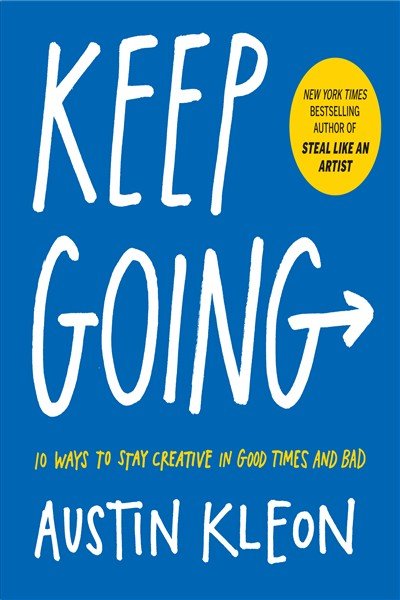
Austin Kleon presents ten principles for sustaining creative work in chaotic times. The creative life is cyclical, not linear. There’s no “arrival,” only daily practice. Build routines, create sacred disconnected space, focus on the verb (doing) not the noun (being), make gifts without market pressure, find extraordinary in ordinary through attention, and remember that art serves life, not the other way around.
⭐ The One Thing
The one thing this book taught me: The fundamental question every creative person must answer is “What would you do if you were stuck in one place and every day was exactly the same and nothing that you did mattered?” How you answer this question is your art.
💭 First Impressions
The Groundhog Day metaphor clicked immediately—it reframes creative work as cyclical practice rather than hero’s journey toward arrival. Kleon’s illustration style makes the book feel like spending time in an artist’s sketchbook, visually appealing and engaging. The book could have used more on creative collaboration, as most principles focus on solo practice with limited discussion of working with others.
🔑 Key Concepts
-
The Groundhog Day Principle: Creative work is cyclical, not linear. Accept that you’ll never “arrive” and focus on daily practice instead of destination. The question isn’t whether creative work gets easier (it doesn’t) but how you show up when it doesn’t matter, when you’re stuck in repetition, when nobody’s watching. How we spend our days is how we spend our lives.
-
Bliss Station: Joseph Campbell’s concept of a sacred space or time where you disconnect from the world to reconnect with yourself and your work. “You must have a room, or a certain hour or so a day, where you don’t know what was in the newspapers that morning, you don’t know who your friends are, you don’t know what you owe anybody.” A bliss station can be spatial (dedicated room) or temporal (dedicated hour). One can compensate for lack of the other.
-
Verb Over Noun: Focus on doing the work (the verb) rather than identifying as an artist (the noun). Job titles can restrict creativity and delay action. Let go of the thing that you’re trying to be and focus on the actual work you need to be doing. Doing the verb will take you someplace further and far more interesting.
-
Gift Economy: Creating without market pressure reconnects you with the pure joy of making and helps combat burnout and creative disenchantment. When you feel burned out from selling your work, make something for someone specific. We used to have hobbies; now we have “side hustles.” The quickest way to recover when you’ve lost your gift is to step outside the marketplace and make gifts.
-
Attention as Love: “Attention is the most basic form of love.” Paying close attention to ordinary life transforms it into extraordinary material for art. You don’t need an extraordinary life to make extraordinary work. Everything you need can be found in your everyday life. If you want to change your life, change what you pay attention to.
🧠 Mental Models & Frameworks
-
Airplane Mode as Way of Life: Use this any time you need deep creative work or mental clarity. The phone takes away three key elements of discovery: loneliness, uncertainty and boredom. Those have always been where creative ideas come from. Replicate airplane conditions on the ground—switch phone to airplane mode, use earplugs, create stretches of captive uninterrupted time.
-
Magical Tidying: Use this when creatively stuck or mentally cluttered. Physical organization (cleaning, walking, sleeping) helps clear mental space and often leads to creative breakthroughs. Scientists have shown that sleep literally flushes toxins from your brain. Picking up trash or tidying your studio can unstick creative problems.
-
Routine as Freedom: Use this when setting up sustainable creative practice. A little imprisonment—if it’s of your own making—can set you free. Routine protects creative time from ups and downs of life and helps you take advantage of limited time, energy and talent. “Be regular and orderly in your life so that you may be violent and original in your work.”
-
Seasonal Creativity: Use this when feeling discouraged by perceived lack of productivity. Nature operates in cycles—growth, harvest, dormancy, renewal. Creative work follows same pattern. You have to pay attention to rhythms and cycles of your creative output and learn to be patient in off-seasons.
-
List-Making as Mental Tidying: Use this when managing anxiety, overwhelming sense of things to do, or generating ideas. Making lists reduces vague nagging sense that overwhelming number of things need doing. Keep multiple list types: to-do lists, to-learn lists, someday/maybe lists, what-you-won’t-do lists and pros-and-cons lists.
💬 My Favorite Quotes
Let go of the thing that you’re trying to be (the noun) and focus on the actual work you need to be doing (the verb). Doing the verb will take you someplace further and far more interesting.
We have so little control over our lives. The only thing we can really control is what we spend our days on. What we work on and how hard we work on it.
The phone gives us a lot but it takes away three key elements of discovery: loneliness, uncertainty and boredom. Those have always been where creative ideas come from.
🙋 Who Should Read It?
-
Creative professionals feeling burned out from market pressures, social media performance anxiety or loss of joy in their work. Anyone experiencing creative disenchantment where work that used to bring joy now feels like grinding obligation.
-
Writers, artists and makers constantly connected to devices and news cycles wondering why they can’t focus, or people who check their phone first thing in morning and wonder why their days feel scattered.
-
Those treating every creative act as potential income stream and losing the pure joy of making, or people who believe they need extraordinary lives to make extraordinary creative work.
🔗 Additional Resources
Related Books by Austin Kleon:
- “Steal Like an Artist” (foundation for creative practice)
- “Show Your Work” (sharing creative work online)
- “The Steal Like an Artist Journal”
Books Referenced or Related:
- “The Power of Myth” by Joseph Campbell (bliss station concept, following your bliss)
- “Daily Rituals” by Mason Currey (creative routines of 161 artists and thinkers)
- “The Artist’s Way” by Julia Cameron (morning pages, creative recovery)
- “Big Magic” by Elizabeth Gilbert (living creatively beyond fear)
- “The War of Art” by Steven Pressfield (resistance and creative work)
Artists and Thinkers Referenced:
- Lynda Barry (phone taking away creative conditions)
- Annie Dillard (how we spend our days)
- Ingmar Bergman (demons hate fresh air)
- David Sedaris (tidying as creative practice)
- Henry David Thoreau (living in each season)