
⚡ The Lightning Summary
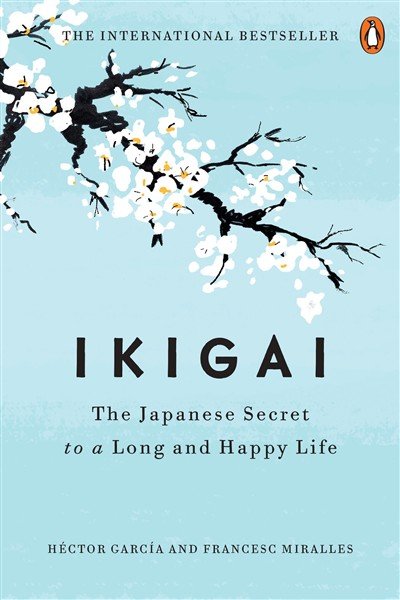
Japanese centenarians reveal the secret to extraordinary longevity: discovering your ikigai (reason for being), eating until 80% full, moving daily without intense exercise, nurturing deep friendships through moai communities, and living each moment with purpose. By combining ancient wisdom with modern research on Blue Zones, the authors show how finding meaning, staying active, managing stress and embracing imperfection creates a life worth living well past 100.
⭐ The One Thing
The one thing this book taught me: Your ikigai—your reason for being, the thing that makes you excited to wake up each morning—is not something you create or force into existence. It’s something you discover by staying curious, keeping busy with meaningful work (however small), nurturing relationships and living fully in each present moment. When you align your life with your ikigai, longevity and happiness follow naturally as byproducts, not goals to chase.
💭 First Impressions
The research wasn’t just philosophical—it was grounded in hard data from Okinawa’s centenarians who genuinely live these principles daily. These aren’t theories; they’re lived realities of people who make it past 100 with vitality. The book doesn’t just tell you how to live longer—it makes you want to. It transformed longevity from a medical goal into an art form, a daily practice of meaning-making that happens to extend your years as a bonus. The concept that Japan has no word for “retire” in the sense of permanently leaving the workforce revealed a fundamentally different relationship with purpose and aging than Western cultures.
🔑 Key Concepts
-
Ikigai (生き甲斐) – Your Reason for Being: The Japanese concept combining “life” with “to be worthwhile.” It’s not a grandiose life mission—it can be as simple as being a good parent, tending a garden or helping neighbors. The key is that it gives you a reason to get up in the morning. Unlike Western concepts of purpose, ikigai doesn’t require monetization or recognition; it just needs to bring you meaning and keep you engaged with life.
-
Hara Hachi Bu – The 80% Rule: Ancient Okinawan practice of stopping eating when your stomach is 80% full rather than completely satisfied. This reduces caloric intake (Okinawans average 1,785 calories/day vs 2,068 in rest of Japan), decreases free radicals that cause cellular aging and prevents the energy drain of heavy digestion. This single practice may be one of the most powerful longevity interventions available.
-
Moai – Connected for Life: Informal groups of people with common interests who support each other throughout life. Originating from hard times when farmers helped each other through poor harvests, moai now serve as social safety nets, sources of joy and critical components of mental health. Research shows that strong social bonds are as important as diet for longevity.
-
Flow – Complete Immersion in the Present: Building on Mihaly Csikszentmihalyi’s research, the book explores how Japanese takumis (master artisans) and even everyday workers find flow in their tasks. Flow occurs when you’re fully absorbed in an activity that’s challenging but achievable, with clear objectives and no distractions. Japanese culture has mastered finding microflow even in mundane tasks.
-
Antifragility and Wabi-Sabi – Strength Through Imperfection: Combining Nassim Taleb’s concept of antifragility (growing stronger from stress) with the Japanese aesthetic of wabi-sabi (finding beauty in imperfection), the book teaches resilience as an active practice. Rather than just bouncing back from adversity, you can use setbacks to become stronger.
🧠 Mental Models & Frameworks
-
The Blue Zones Framework: Use this when designing lifestyle changes for longevity and health. Five geographic regions (Okinawa, Sardinia, Loma Linda, Nicoya, Ikaria) where people live measurably longer share common factors: plant-rich diet, daily movement (not exercise), strong social ties, clear purpose and stress management. Rather than following a single diet or exercise plan, look at the intersection of these factors.
-
The Seven Flow Conditions: Use this when entering deep work or making any activity more engaging. Owen Schaffer’s framework states that flow requires knowing what to do, how to do it, how well you’re doing, where to go, facing significant challenges, having significant skills and being distraction-free. If you’re not achieving flow, diagnose which condition is missing.
-
Logotherapy’s Five-Step Process: Use this when feeling lost, lacking direction or experiencing existential emptiness. Viktor Frankl’s framework involves recognizing your feelings of emptiness, understanding this is a desire for meaningful life, discovering your current life purpose, deciding to accept or reject that path, and letting newfound passion help overcome obstacles.
-
The Stoic Control Dichotomy: Use this when facing stress, worry or situations outside your control. Divide every situation into what you can control (your actions, responses, attitudes) and what you can’t (others’ actions, outcomes, past events). Invest energy only in the controllable column.
-
Rituals Over Goals Framework: Use this when setting New Year’s resolutions, starting new habits or pursuing long-term objectives. Instead of outcome-based goals, focus on process-based rituals. Goals are destinations that create anxiety about not arriving; rituals are practices that bring satisfaction in the doing.
💬 My Favorite Quotes
Everything can be taken from a man but one thing: the last of the human freedoms—to choose one’s attitude in any given set of circumstances, to choose one’s own way.
We need randomness, mess, adventures, uncertainty, self-discovery, hear traumatic episodes, all these things that make life worth living.
The only moment in which you can be truly alive is the present moment.
🙋 Who Should Read It?
-
People experiencing midlife purpose crisis who are questioning the meaning of their work, feeling empty despite external success, or high achievers experiencing burnout wondering when they can finally relax.
-
Health-conscious individuals overwhelmed by conflicting diet and fitness advice who want evidence-based, sustainable approaches from Blue Zone research: walk more, eat until 80% full, maintain friendships.
-
Remote workers and digital nomads struggling with isolation, or anyone caring for aging parents and wanting to see aging as something to embrace rather than fear through the example of Okinawan centenarians.
🔗 Additional Resources
Books by Authors Cited:
- Man’s Search for Meaning by Viktor Frankl – The foundational text on logotherapy and finding purpose
- Flow: The Psychology of Optimal Experience by Mihaly Csikszentmihalyi – Deep dive into flow states
- The Blue Zones by Dan Buettner – Comprehensive research on all five longevity hotspots
- Antifragile by Nassim Nicholas Taleb – How to gain from disorder and chaos
Related Philosophical Traditions:
- Stoicism (Marcus Aurelius, Epictetus, Seneca) – Ancient wisdom on control and resilience
- Buddhism (Thich Nhat Hanh) – Mindfulness and present-moment awareness
- Japanese aesthetics (wabi-sabi, mono no aware, ichi-go ichi-e) – Beauty in imperfection
Practices and Methodologies:
- Morita therapy – Japanese psychotherapy focused on accepting feelings and purposeful action
- Naikan meditation – Reflective practice on relationships and gratitude
- Qigong and tai chi – Gentle movement practices combining body, breath and mind