
⚡ The Lightning Summary
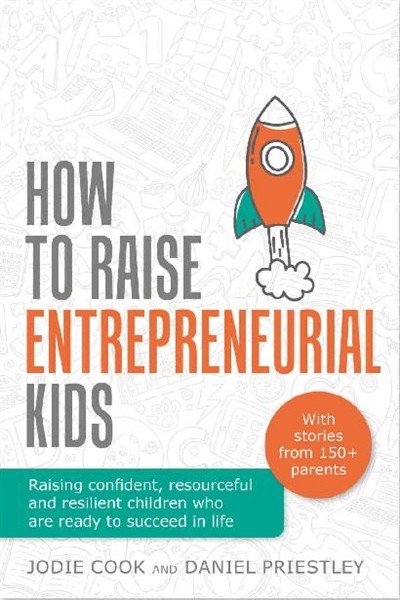
Entrepreneurial skills—confidence, resourcefulness, resilience, creativity and adaptability—are essential for all children to thrive in an unpredictable future, whether they start businesses or not. Schools don’t teach these crucial capabilities, so parents must deliberately cultivate them through four key areas: building an entrepreneurial mindset, teaching practical skills (sales, negotiation, pitching), creating real-world opportunities to practice, and mentoring through questions rather than commands.
⭐ The One Thing
The one thing this book taught me: Raising an entrepreneurial kid isn’t about pushing them to be the next Steve Jobs. It’s about giving your child a sense of control as they grow—the power to set goals that are right for them, pursue those goals and pivot when they choose to.
💭 First Impressions
Schools actively punish entrepreneurial behaviors—behaviors rewarded in business (questioning authority, creative problem-solving, getting others to do complex work) get you in trouble at school. Both authors bring complementary expertise: Jodie founded Clever Tykes, Daniel runs a business accelerator with 3,000 entrepreneurs. The book is practical and immediately actionable—not theoretical parenting philosophy but concrete strategies parents have actually used. The insight that 11 out of 12 young entrepreneurs had parents who started businesses crystallized why role modeling matters more than lectures.
🔑 Key Concepts
-
The Four Pillars Framework: The book is organized around four essential areas for raising entrepreneurial kids. Mindset builds beliefs and attitudes aligned with entrepreneurship—seeing opportunities, feeling in control, embracing challenges. Skills develops practical capabilities like sales, negotiation, pitching, financial literacy, coding and making things. Opportunities creates real-world experiences to practice these skills through decision-making, work projects, business planning. Parent-Mentor role involves guiding through questions rather than commands, leading by example, staying positive about work and money, and listening to their ideas.
-
Role Models as the Overarching Factor: Research with hundreds of entrepreneurs revealed that 11 out of 12 young entrepreneurs had parents who started businesses. This wasn’t about inherited wealth (most started with under £1,000) but about inherited beliefs, attitudes and skills. Children who see entrepreneurial role models believe entrepreneurship is possible for them. Those who don’t, don’t. This extends beyond parents to include family members, teachers, mentors and biographical examples.
-
The Knowledge-Confidence-Enthusiasm Formula: Knowledge instills confidence. Confidence instills enthusiasm. Enthusiasm sells. This applies to everything, not just business. When children have knowledge (how things work, what’s possible, specific skills), it builds their confidence to try. That confidence creates enthusiasm that attracts opportunities and makes them compelling. The cycle reinforces itself as small successes build more knowledge.
-
You Can Teach Victim or Control: A fundamental choice in parenting is whether you teach kids they are victims of circumstance or largely in control. You can teach them they’re stuck with their lot in life or free to change their circumstances in most cases. You can teach them the world is scarce, full of turmoil and despair, or that it’s abundant, full of triumph and change. This core belief system shapes how children approach every challenge and opportunity in life.
-
The Three Brains Model: Understanding how the brain works helps parents guide children effectively. The Reptile handles fight/flight/freeze responses and emotional triggers. The Autopilot runs mindless routine tasks. The Entrepreneur/Visionary is where creativity, strategy, empathy and inspiration happen. When children are in reptile or autopilot mode, they can’t access entrepreneurial thinking. Parents must help them get to the visionary brain through calm, questions and space to think.
🧠 Mental Models & Frameworks
-
The Four Stages of Competence: Use this when teaching any new skill or understanding children’s frustration during learning. Stage 1: Unconscious incompetence (don’t know you can’t do it). Stage 2: Conscious incompetence (know you can’t do it—most frustrating stage). Stage 3: Conscious competence (can do it with focus). Stage 4: Unconscious competence (mastery—second nature). Understanding these stages helps parents know when to push and when to support. When a child struggles with a new skill, recognize they’re in Stage 2—don’t protect them from this necessary discomfort, help them persist to Stage 3.
-
Spider Diagram for Decision-Making: Use this when children face choices or problems they need to solve. Three questions guide better decisions: What is the problem? (Define it clearly). What (else) could you do? (Generate multiple options, not just two). What might happen if you did that? (Consider consequences of each option). Draw it visually with problem in center, options radiating out, consequences branching from each option. Stop solving problems for children—when they bring you a problem, guide them through this framework with questions and let them reach their own conclusions.
-
“What Are You Going to Do About It?”: Use this when children complain or face obstacles. One definition of complaining is describing an event or person negatively without indicating the next steps to fix the problem. Instead of sympathizing or solving for them, ask “What are you going to do about it?” This shifts focus from problem to solution, from victim to agent. Trains children to automatically move to action rather than staying stuck. Make this your default response to complaints—don’t fix, don’t commiserate excessively, guide them to own their response.
-
“Yes, And…” Instead of “No, Because…”: Use this when children propose ideas, especially wild or impractical ones. Borrowed from improv comedy, “No, because…” shuts down idea generation and signals that adults know better. “Yes, and…” keeps ideas flowing, builds on their thinking, teaches them to think bigger. Even if the original idea isn’t viable, the process of building on it develops creativity and confidence. When a child suggests something, resist immediate critique—say “Yes, and what else?” or “Yes, and how would that work?” Let them discover limitations through exploration, not parental veto.
-
The 10 Ideas Exercise: Use this as daily practice for becoming an ideas machine. Every day, come up with 10 ideas about something—doesn’t matter what. 10 restaurants to open. 10 ways to improve your school. 10 gifts for grandma. 10 business ideas. The first 3 are easy, next 4 are hard, last 3 require mental muscle you’re building. James Altucher says this practice changed his life. Builds the creativity muscle children need. Make this family dinner conversation—each person shares their 10 ideas on a topic with no judgment, no critique, just generation. Celebrate wild ideas.
💬 My Favorite Quotes
Ultimately, the bigger picture of raising an entrepreneurial kid is not about pushing your child to be the next Steve Jobs or Anita Roddick; it doesn’t even matter if they never start a business. What matters most is that your child feels a sense of control as they grow and learn about the world.
The fun part of Lego is building it. When it gets knocked over, you get to have even more fun doing more building.
You will be the same person in five years as you are today except for the people you meet and the books you read.
🙋 Who Should Read It?
-
Parents worried about preparing kids for an uncertain future where jobs change rapidly, who see their children lacking confidence or waiting to be told what to do rather than taking initiative.
-
Anyone raising children who complain frequently, approach obstacles with victimhood rather than resourcefulness, or parents who solve too many problems for their kids and wonder when children will become more self-reliant.
-
Entrepreneurs who want to pass on mindset and skills to their children but don’t know where to start, or parents frustrated that schools don’t teach practical life skills like negotiation, sales and financial literacy.
🔗 Additional Resources
Entrepreneur Biographies Featured:
- Larry Ellison (Oracle) – Started with $1,200
- Carrie Green (Female Entrepreneur Association)
- Daymond John (FUBU) – Started with mother’s mortgage
- Chris Gardner (The Pursuit of Happyness)
- Sara Davies MBE (Crafter’s Companion)
- Arnold Schwarzenegger
- Thomas Edison
Related Organizations:
- Clever Tykes (Jodie Cook’s entrepreneurship education company)
- Dent Global (Daniel Priestley’s business accelerator)
Concepts and Frameworks Referenced:
- The Four Stages of Competence
- Carol Dweck’s Growth Mindset
- James Altucher’s “10 Ideas” practice
- Spider diagram decision-making
- AQ (Adaptability Quotient) over IQ/EQ
- Three Brains Model (Reptile, Autopilot, Entrepreneur)
Complementary Reading:
- Mindset by Carol Dweck (growth mindset)
- Grit by Angela Duckworth (perseverance)
- Books by the featured entrepreneurs (autobiographies)