
⚡ The Lightning Summary
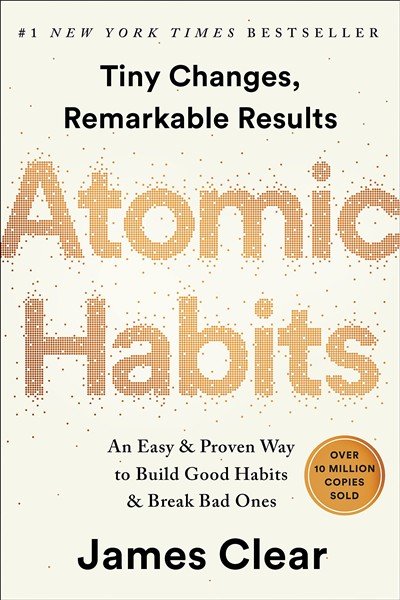
Small changes compound into remarkable results. Focus on systems over goals, make habits obvious, attractive, easy and satisfying, and build an identity around who you want to become. Tiny improvements of 1% each day create exponential growth over time through the power of compounding.
⭐ The One Thing
The one thing this book taught me: Your habits shape your identity and your identity shapes your habits. The most effective way to change your behavior is to focus not on what you want to achieve, but on who you wish to become. Every action is a vote for the type of person you want to be.
💭 First Impressions
The book immediately grabbed me with its practical, science-backed approach that avoids typical self-help fluff, delivering a framework that actually works. The concept that small habits compound over time resonated deeply, with the math showing 1% better daily compounds to 37x better in a year. What struck me most was the emphasis on identity over outcomes and how environment design trumps willpower every time. The Plateau of Latent Potential explained why I had quit so many things in the past: I was giving up right before the breakthrough because results lag behind effort.
🔑 Key Concepts
-
The Power of 1% Better: Getting 1% better each day compounds to being 37 times better after one year. Conversely, getting 1% worse leads to decline. Small changes seem insignificant in the moment but deliver remarkable results over time.
-
The Plateau of Latent Potential: Habits often appear to make no difference until you cross a critical threshold. This is the valley of disappointment where people give up. Breakthrough moments are often the result of many previous actions building up potential required to unleash a major change.
-
Goals vs. Systems: Goals are about the results you want to achieve. Systems are about the processes that lead to those results. Winners and losers have the same goals, but winners have better systems. Fall in love with the process, not the product.
-
Identity-Based Habits: The ultimate form of intrinsic motivation is when a habit becomes part of your identity. True behavior change is identity change. The goal is not to read a book but to become a reader. Not to run a marathon but to become a runner.
-
The Four Laws of Behavior Change: Every habit follows a simple pattern: cue, craving, response and reward. Make good habits obvious, attractive, easy and satisfying. Make bad habits invisible, unattractive, difficult and unsatisfying.
🧠 Mental Models & Frameworks
-
The Habit Loop Framework: Cue leads to Craving leads to Response leads to Reward. Understanding this cycle helps you design better habits and break bad ones. To change behavior, manipulate any part of this loop.
-
The Two-Minute Rule: When you start a new habit, it should take less than two minutes to do. “Read before bed each night” becomes “Read one page.” The point is to master the habit of showing up. Once you’ve started, it’s much easier to continue.
-
Environment Design Principle: Make good habits obvious and easy by designing your environment. People with high self-control tend to spend less time in tempting situations. It’s easier to avoid temptation than resist it.
-
Habit Stacking: Link new habits to existing ones using the formula: “After [CURRENT HABIT], I will [NEW HABIT].” This creates a system that naturally pulls you toward your desired behavior.
-
The Goldilocks Rule: Humans experience peak motivation when working on tasks that are right on the edge of their current abilities. Not too hard, not too easy. Just right. The greatest threat to success is not failure but boredom.
💬 My Favorite Quotes
You do not rise to the level of your goals. You fall to the level of your systems.
The most effective way to change your behavior is to focus not on what you want to achieve, but on who you wish to become.
The purpose of setting goals is to win the game. The purpose of building systems is to continue playing the game.
🙋 Who Should Read It?
-
Anyone struggling to build good habits or break bad ones who has tried traditional goal-setting approaches but found them ineffective and feels frustrated by lack of progress despite effort.
-
Entrepreneurs, students, athletes and professionals looking for a practical framework for behavior change rather than motivational platitudes, especially those who want systems over willpower.
-
Parents, teachers, managers and leaders who want to understand how to design environments and systems that naturally encourage positive behaviors in others.
🔗 Additional Resources
James Clear’s Website:
jamesclear.com features his popular 3-2-1 newsletter with weekly insights on habits, decision-making and continuous improvement
Related Books:
- “The Power of Habit” by Charles Duhigg (explores the neuroscience of habit formation)
- “Tiny Habits” by BJ Fogg (complementary approach focusing on celebration and emotion)
- “Hooked” by Nir Eyal (habit formation from a product design perspective)
- “Deep Work” by Cal Newport (building habits for focused work)
- “Essentialism” by Greg McKeown (doing less but better)
Scientific Sources:
Clear draws heavily from behavioral psychology research. Key researchers referenced include B.F. Skinner (operant conditioning), Daniel Kahneman (decision-making), Carol Dweck (growth mindset) and Roy Baumeister (willpower research)