⚡ The Lightning Summary
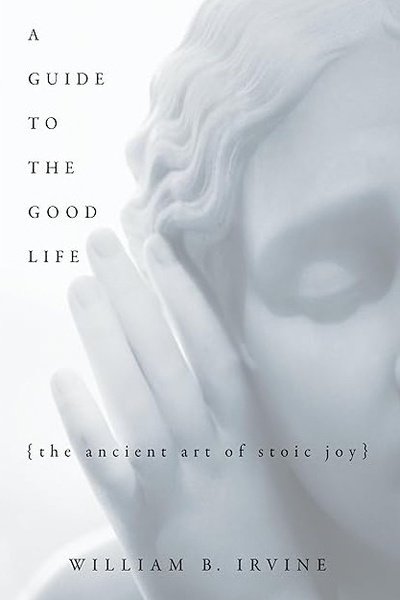
A practical guide to Stoic philosophy that teaches how to live a good life by pursuing tranquility rather than pleasure or status. Through techniques like negative visualization, voluntary discomfort and the trichotomy of control, you can reduce anxiety, appreciate what you have and build resilience against life’s inevitable hardships.
⭐ The One Thing
The one thing this book taught me: True happiness comes not from acquiring more but from wanting what you already have. By regularly imagining the loss of what we value (negative visualization), we can transform hedonic adaptation into lasting appreciation and build a life of tranquility rather than endless desire.
💭 First Impressions
What immediately surprised me was how practical this book is. I expected abstract philosophy but found concrete psychological techniques directly applicable to contemporary anxiety. The counterintuitive optimism revealed that contemplating loss actually increases joy rather than creating fear, finally explaining why achieving goals often leads to emptiness (hedonic adaptation). The Stoic paradox is fascinating because most ambitious historical Stoics were remarkably successful despite teaching contentment. The accessible scholarship bridges ancient texts and modern psychology in a way that makes Stoicism feel less like dusty philosophy and more like an operating system for a calmer life.
🔑 Key Concepts
-
Philosophy of Life: Most people lack a coherent grand goal in living, leaving them vulnerable to wasting their one chance at life. Without understanding what you find most valuable and a strategy to attain it, you risk living according to society’s distractions rather than your own values. A philosophy of life provides both a target and a roadmap.
-
Hedonic Adaptation: The psychological phenomenon where we quickly take for granted whatever we obtain, leading to endless cycles of desire and disappointment. After working hard to acquire something, we lose interest and form new, grander desires. This explains why achieving goals often fails to bring lasting satisfaction and why many successful people remain unhappy.
-
Negative Visualization: The core Stoic technique of regularly imagining the loss of what we value, including possessions, abilities, loved ones and life itself. Rather than causing anxiety, this practice increases appreciation for what we have, prevents taking things for granted and prepares us psychologically for inevitable losses. It’s the antidote to hedonic adaptation.
-
Trichotomy of Control: Dividing life’s elements into things we have no control over, complete control over and some but not complete control over. We should ignore what we can’t control, focus on what we fully control (like our character and values), and carefully internalize goals for things we partially control (like “playing my best” instead of “winning the match”).
-
Tranquility vs Virtue: While Greek Stoics emphasized virtue as the primary goal, Roman Stoics focused on tranquility, a psychological state marked by the absence of negative emotions (grief, anger, anxiety) and the presence of positive ones (joy). The two are connected because attaining virtue naturally leads to experiencing tranquility.
🧠 Mental Models & Frameworks
-
The Adaptation Reversal Technique: Instead of thinking about what you want but don’t have, imagine losing what you currently possess. Mentally subtract your spouse, home, health or freedom and vividly experience that loss before returning to reality. Use this whenever feeling dissatisfied with what you have. A morning practice of imagining loss of daily comforts before experiencing them transforms routine into gratitude.
-
Retrospective Negative Visualization: Rather than mourning what you’ve lost, imagine never having had it at all. Replace “I lost X” with “I was lucky to have X for as long as I did.” When relationships end or opportunities disappear, reframe from deprivation to gratitude for the experience.
-
Voluntary Discomfort as Insurance: Periodically create mild discomfort (underdressing for cold, skipping meals when food is available, sleeping on hard surfaces) to build resilience during times of comfort and stability. Regular fasting, cold showers and camping trips serve as “insurance premiums” that reduce trauma when involuntary hardship arrives.
-
Internal Goal Transformation: Transform external goals (winning, getting promoted, being liked) into internal goals (playing your best, doing excellent work, being kind). You control the latter completely, eliminating disappointment over uncontrollable outcomes. Business success becomes “did I execute my strategy well” rather than “did I make X revenue.”
-
Fatalistic Present, Active Future: Accept that the present moment and all past moments are beyond your control because they’ve already happened. This isn’t resignation but recognition that anxiety about the unchangeable is wasted energy. Reserve action for the future, which you can still influence. Stop ruminating on today’s problems (“it is what it is”) while planning tomorrow’s solutions.
💬 My Favorite Quotes
Without a coherent philosophy of life, there is a danger that you will mislive – that despite all your activity, despite all the pleasant diversions you might have enjoyed while alive, you will end up living a bad life.
The easiest way for us to gain happiness is to learn how to want the things we already have.
When we say good-bye to a friend, we should silently remind ourselves that this might be our final parting.
🙋 Who Should Read It?
-
Achievement-driven people feeling empty who have successfully climbed career or financial ladders but wonder “is this it?” when reaching each milestone. Perfect for understanding why accomplishment hasn’t brought expected fulfillment.
-
Chronic worriers and overthinkers spending excessive mental energy on things beyond their control, from global events to other people’s opinions. Provides practical framework for redirecting that energy productively.
-
Those recovering from loss who are grieving relationships, careers, health or loved ones and seeking a philosophical framework for processing pain. Offers tools for acceptance without suppression or toxic positivity.
-
Philosophy skeptics seeking practicality who dismiss philosophy as abstract navel-gazing but struggle with anxiety, dissatisfaction or meaning. Bridges ancient wisdom with actionable psychological techniques backed by modern research.
🔗 Additional Resources
Original Stoic Texts:
- Marcus Aurelius – “Meditations”
- Seneca – “Letters from a Stoic”
- Epictetus – “Enchiridion” and “Discourses”
- Musonius Rufus – “Lectures and Sayings”
Modern Stoicism:
- Ryan Holiday – “The Obstacle Is the Way”
- Massimo Pigliucci – “How to Be a Stoic”
- Donald Robertson – “How to Think Like a Roman Emperor”
- The Daily Stoic (website and newsletter)
Related Philosophical Traditions:
- Buddhism – Parallel focus on impermanence and desire
- Existentialism – Modern philosophy addressing meaning-making
Psychological Research:
- Hedonic adaptation studies – Shane Frederick and George Loewenstein
- Cognitive Behavioral Therapy – Modern therapy based partly on Stoic principles
- Positive psychology – Martin Seligman’s work on well-being